
Projects
Project to Enhance the Appeal of “Community Gathering Spaces” through the Use of eSports
Share on:


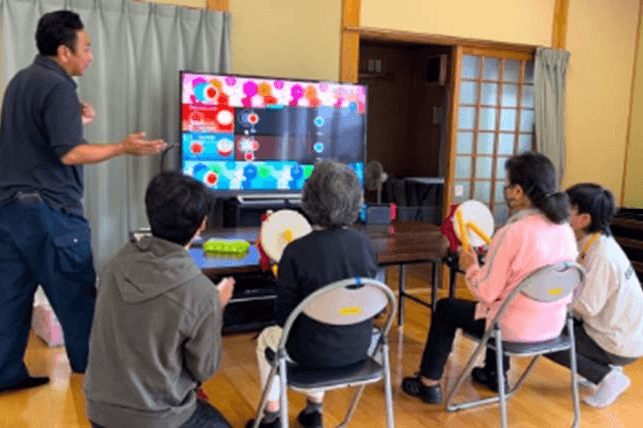
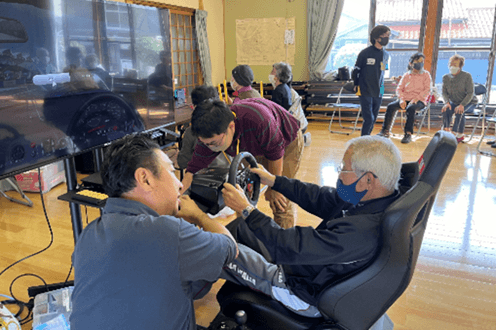
This project aimed to enhance the appeal of “community gathering spaces,” which serve as social and recreational hubs for older adults, by introducing eSports—an increasingly popular activity in recent years—as a new program option. Working directly with older participants, the project examined how eSports could promote new forms of interaction and help create sustainable and attractive gathering spaces.
The initiative began with helping older adults understand what eSports are. With support from APU students, participants learned how to enjoy playing games themselves. As the program progressed, it became evident that eSports offer unique characteristics: they can be enjoyed regardless of age, physical ability, nationality, or gender, and they enable both individual and group participation. In the digital era, eSports also allow people to play with others remotely, facilitating intergenerational exchange. With this in mind, the project also collaborated with APU’s international students and the welfare facility “Taiyo no Ie” to explore how eSports can contribute to fostering an inclusive society.
The results demonstrated that eSports naturally promote interaction among participants by providing shared goals and common play experiences. Moreover, because they require relatively little specialized knowledge and can be accessed without relying on physical strength, language skills, or age, eSports can encourage interaction among people with diverse backgrounds. The project also confirmed that, in addition to promoting exchange among different user groups, the use of digital games helped older adults improve their digital device operation skills and digital literacy, contributing to the reduction of the digital divide.
Note on “Community Gathering Spaces”
Community gathering spaces are local interaction hubs promoted by Japan’s Ministry of Health, Labour and Welfare. In Oita Prefecture, there are more than 3,000 such locations serving as places of relaxation for older adults. However, many of these spaces currently face challenges such as limited variety of activities, reliance on a fixed group of regular users, and difficulty attracting new participants. To revitalize these spaces and foster greater opportunities for social engagement among older adults, developing new and appealing activity programs has become essential.