Living as a Bridge —
Across Borders,
from Tourism to Human Development
and University Building
from Tourism to Human Development
and University Building
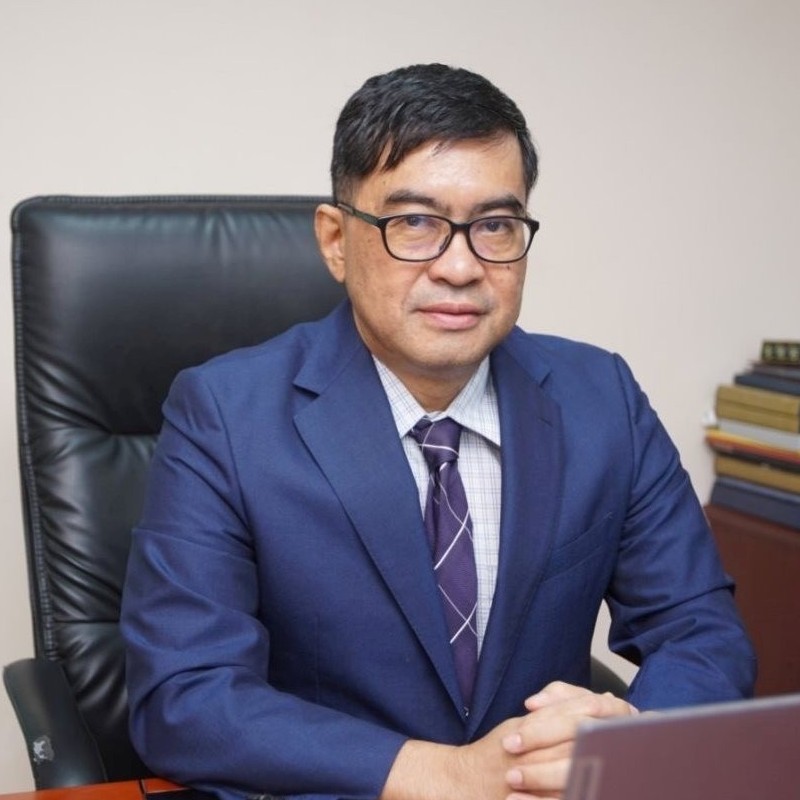
Aung Lin Htin
Chairman & CEO


Introduction
Mr. Aung Lin Htin enrolled at APU as a member of its first cohort in 2000. After graduating, he returned to Myanmar, where he founded a travel company and went on to develop a wide range of ventures, including Japanese language schools, caregiver training institutions, culinary training programs, and hotel businesses.
Amid constant social and economic change, one commitment has remained at the core of his work: creating opportunities for learning and growth for the younger generation. From tourism to education, and ultimately to building higher education institutions, his initiatives have steadily expanded to support Myanmar’s next generation. In this interview, we explore his journey and the convictions that continue to guide his work.
A Place to Study International Relations and Tourism — The University I Felt Was Right for Me
“I want to see the world beyond Myanmar.”
That aspiration led Mr. Aung Lin Htin to Japan, and eventually to APU.
In the late 1990s, when I was a student, Myanmar was in a period of gradual economic liberalization after many years under a socialist system. Foreign investment from countries such as Japan and the potential of the tourism industry were beginning to attract attention. At the time, I felt that if this was the case, I wanted to see the outside world for myself. I was already studying at a university in Myanmar and working part-time as an English-speaking tour guide and interpreter, which only strengthened my desire to look beyond my own country.
With this in mind, I decided to study Japanese for one year at Kyoto University of Foreign Studies. While living in Kyoto, I came across a leaflet announcing the opening of APU. Students from across Asia would gather there, and it offered programs in international relations and tourism—exactly the fields I wanted to study. I immediately felt, “This is the place for me.” I was already around 24 years old at the time, and I had a clear sense of what I wanted to learn and what I wanted to do.
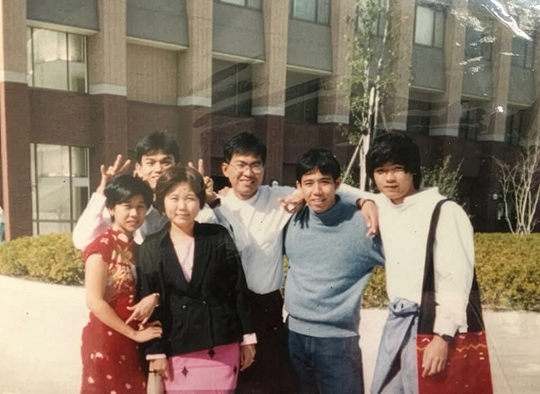
After being accepted, I traveled from Osaka to Beppu by ferry. As it was the university’s first year, some campus facilities were still under development. Looking back, however, being able to witness the campus gradually taking shape as a student was a valuable experience. I also have fond memories of how kind and supportive the faculty and staff were—they always responded quickly whenever I sought advice.
Students came from a wide range of countries. Many of us, myself included, initially held a one-sided belief that “my way of thinking is correct.” Over time, however, we began to realize that there are different perspectives, and that it is possible to engage with others even when our ways of thinking differ. I also learned to read books more critically, rather than accepting what was written at face value. For example, if I had questions about a book on Middle Eastern affairs, I could simply talk directly with classmates from that region.
Above all, my encounters with APU’s dedicated professors had the greatest impact on me. Professor Masakatsu Ogata taught me the fundamentals of tourism studies in a comprehensive way. From Professor Katsuhiro Ohashi, I learned perspectives on intercultural understanding and cultural comparison. Professor Makitaro Hotta, who specializes in international law, taught me how to understand the world in a structural way. Even now, I strongly feel that what I learned at APU laid the foundation for working in the international community.
Under Professor Ogata’s guidance, two study tours to Myanmar were organized. As the leader of these tours, I accompanied around ten APU students each time and planned and conducted programs focused on three themes—culture, nature, and religion—introducing local life and history in Myanmar. I was especially pleased to be able to guide students through the Bagan ruins before they were registered as a UNESCO World Heritage Site. Bagan is Myanmar’s largest cultural heritage site, home to around 3,000 temples and pagodas built in the 11th century.
These experiences later became directly connected to my decision to establish a tourism business.
My volunteer activities are also memorable. My involvement as a volunteer interpreter during the 2002 FIFA World Cup became the starting point of my connection with JTB Oita. That encounter later developed into an ongoing professional relationship through subsequent projects.
Founding a Travel Company: Introducing Myanmar to the World
Soon after graduating, Mr. Aung Lin Htin founded a travel company together with his older brother. At a time when Myanmar was beginning to open itself to the world, he believed that encouraging people to visit the country and truly get to know it could become a driving force for social change.
When I thought about how Myanmar could develop, I felt that attracting investment from abroad was essential. For that to happen, people first needed to understand Myanmar. If visitors came to the country and experienced what it was really like, they might think, “I’d like to do business here,” or “I’d like to invest in this country.” With this belief, my brother and I established Myanmar Polestar Travels & Tours.
The early days were extremely challenging. Even purchasing plane tickets to Japan for business trips required days of searching for the cheapest options, and at first there was almost no revenue. Some of my former APU classmates suggested that it might be better for me to work in Japan instead. Still, I was able to persevere because I believed that Myanmar society would continue to improve, and I wanted to contribute to that future.
By continuing negotiations with Japanese travel agencies as well as local hotels and restaurants in Myanmar, we gradually earned their trust. My brother built a relationship with Hankyu Travel International, and as we handled an increasing number of tour packages, we gained valuable know-how. This eventually led to business inspection tours and corporate projects. Around our fifth year, business performance began to improve steadily.
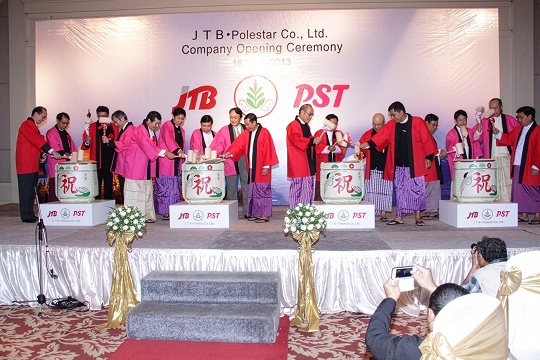
In 2013, we established a joint venture with JTB called JTB-Polestar. Later, in 2019, we opened a hotel in Bagan.”
Developing Talent in Care, Food Services, and beyond—Connecting Japan and Myanmar Through People
After building extensive experience in the tourism business, Mr. Aung Lin Htin turned his attention to creating systems for human resource development. At the time, Japan was expanding its technical intern training programs, particularly in the fields of nursing care and welfare, and actively accepting foreign workers. Meanwhile, in Myanmar, opportunities for higher education and employment were limited, and young people had few chances to acquire specialized skills. Recognizing the overlap between the needs of the two countries, he came to believe that developing human talent could both expand the future possibilities of Myanmar’s youth and strengthen Japanese society. This conviction led him to step into the field of education and training.
I had always wanted to work in human resource development. When I was a student at APU, I worked part-time at Ohara College of Business, where I had the opportunity to observe classes on business manners and accounting. Through that experience, I became strongly aware of the contrast between Japan and Myanmar. In Japan, qualifications are required for almost everything, and people are trained in a highly systematic way. In Myanmar, by contrast, people can often work without formal qualifications. That difference left a deep impression on me. It was then that I began to think, “I want to nurture people in Myanmar who can work on an international level. I want to create schools that make this possible.”
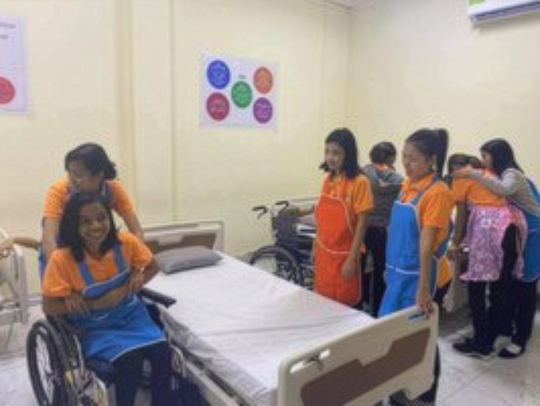
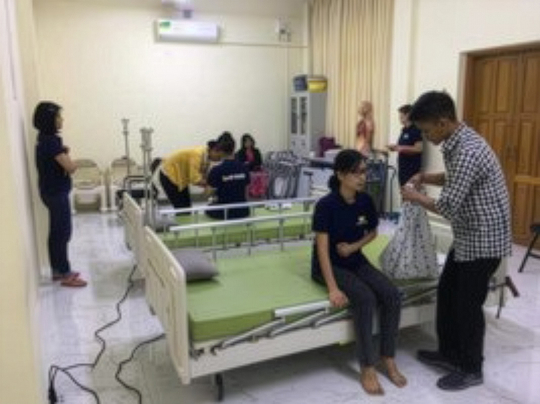
Later, I moved into the field of caregiving, which was almost unknown in Myanmar at the time. In collaboration with the Japanese companies Sakura Community Service (Sapporo) and Egao Ichiban (Gifu), together with Myanmar’s Ministry of Health and Sports, I co-founded Polestar Kaigo Service, a vocational training school dedicated to caregiving education. The concept of caregiving as a profession was largely unfamiliar in Myanmar, where caring for elderly family members had traditionally been regarded as a family responsibility rather than a professional occupation.
Graduates of this caregiving vocational school go on to work in Japan through the technical intern training system. To support this process, I also established Polestar Service, a company responsible for sending trained personnel to Japan.
In addition to the caregiving field, we collaborate with Nisshin Medical Foods Co., Ltd., a company that provides meal services to hospitals and welfare facilities in Japan, to train and dispatch personnel in the culinary and institutional food service sector. Trainees receive direct instruction from Japanese instructors dispatched from Nisshin Medical Foods Myanmar, where they learn practical on-site skills, Japanese customs, and workplace etiquette.
We are also engaged in training personnel for the hospitality industry. One of our strengths in this area is that trainees can gain hands-on experience at our own hotel, which we operate in Myanmar.
At the same time, we operate our own Japanese language school, P.S.T Academy. By combining Japanese language education with caregiving training, we have built a dual-track system for developing human talent. As of 2024, the number of trainees we have trained and sent abroad has exceeded 1,500.
Developing human talent is not something that can be achieved simply by teaching from textbooks. Language proficiency for working in Japan, the ability to understand situations accurately and make sound judgments in the workplace, and an attitude that transcends cultural differences—all of these are essential.
Even when students study Japanese or caregiving, the real challenge lies in reaching a level at which they can actually work in Japan. For example, at our Japanese language school, we set passing the JLPT N4 level before departure as a target. However, the Japanese required to pass an exam is not the same as the Japanese used in real workplaces, so we provide additional instruction to bridge that gap.
In caregiving education, we use the same training materials as those used in Japan’s official introductory caregiving programs. Students are also taught directly by Japanese instructors who are deeply familiar with hospitals and care facilities in Japan, where strict safety standards are the norm. Because this work involves people’s lives, there is no room for compromise.
Seemingly small differences in everyday behavior are also important. For instance, students in Myanmar often stand with their arms folded in front of a teacher, as this is considered a respectful posture in their culture. In Japan, however, the same gesture can be perceived as rude. There are also differences in attitudes toward apology—Myanmar does not have a culture of apologizing readily in the way Japan does.
By carefully explaining these cultural differences, Myanmar and Japanese staff work together to ensure that graduates develop a strong sense of responsibility as professionals working in Japan. At the same time, they are taught to understand the perspectives and expectations of the companies and workplaces that will receive them.
Human resource development does not end once people are sent overseas. Aung Lin Htin continues to stand alongside young people as they face anxiety, setbacks, and the challenges of moving forward in unfamiliar environments.
Even now, we maintain regular contact with those working in Japan, providing ongoing support, management, and consultation. Especially in the early period after arrival, many express how difficult and exhausting it feels. Some become discouraged, and others are moved to tears.
I often encourage them by saying, “Just try your best, even if it’s only for a short while.” If they can push through the first six months, they gradually become accustomed to the new environment. And if their health truly cannot endure it, it is okay to step away. But first, I encourage them to give it their best for six months.
One recent piece of good news was that a student from our very first cohort informed us that they had passed Japan’s national examination for certified care workers. This is a challenging exam even for Japanese candidates. After approximately four and a half years of effort in Japan, they succeeded. We also heard from our partner companies, and everyone shared in the joy of this achievement.
We have also received stories of siblings who both worked in Japan and, through their combined efforts, were able to build a home for their parents. This would have been extremely difficult had they remained working only in Myanmar. When I hear stories like these, I truly feel that all of this work has been worthwhile.
The Next Ambition: Building a Private University
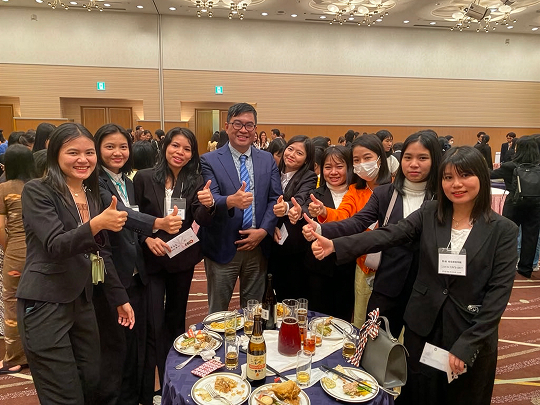
Supporting young people as they work in Japan and carve out their own paths has led Aung Lin Htin to a new vision. What lies beyond is the creation of a place for higher education where young people in Myanmar can learn and build their futures. Just as his experience at APU transformed his own life, he now hopes to pass that opportunity on to the next generation in Myanmar. This has become his next dream.
In Japanese, the word jinzai 人材(human resources) is sometimes written as jinzai人財, meaning “human assets.” For me, people truly are assets. That is why I am deeply committed to human resource development. Of course, I want the people we send abroad to become valuable contributors in their workplaces. But more than that, I hope that young people from Myanmar will grow through their work and become individuals who can succeed anywhere in the world.
Working in a foreign country is extremely challenging. However, once someone overcomes those difficulties and gains the confidence to work independently, their potential expands significantly. This belief is closely connected to what I am thinking about now—how to further strengthen higher education in Myanmar.
At present, I am preparing to establish a high school, and I expect to obtain the necessary license in the near future. Looking ahead, I also hope to acquire a university license and establish a private university. Because the number of universities in Myanmar is limited, many young people do not have sufficient opportunities to receive higher education. I want to change that. Until now, Myanmar has had only national universities, but the government is moving toward increasing the number of private institutions. If we could create a private university that incorporates Japanese expertise in IT, management, and industry, it would offer a major new option for the younger generation.
I also feel that for young people from Myanmar who work in Japan through the technical intern training system, it would be beneficial to have systems that allow them to continue learning after their work in Japan, or that make access to higher education easier. Such structures could lead to more sustainable and meaningful career paths.
That is why I still have many things I want to do. I am curious about many different fields, and when I feel that something might work, I find myself wanting to try it. If it succeeds, that is of course rewarding. If it fails, I simply start again. Perhaps it sounds strange, but for me, taking on new challenges feels almost like a hobby.
That said, I am able to take on new challenges because of the connections I have with other people. As I mentioned earlier, the encounters I had at APU continue to shape what I am doing today. The businesses I have been able to develop exist because people trusted me and thought, “I want to work with you.”
Trust does not emerge overnight—it is built through daily attitudes and consistent effort. That is why the message I most often share with young people is the importance of believing in themselves, not giving up, and becoming someone others can trust. When meaningful encounters and connections are formed, they become a source of strength, enabling people to move forward with resilience even in difficult circumstances.
As a bridge between Japan and Myanmar, I hope to continue supporting the challenges taken on by young people, while contributing, even in small ways, to the future of both countries.
Other Interview
Sharing Beppu’s Appeal Worldwide Through Music: From a Relentless University Life to a Music Bar Rooted in Local Community
Founder and Owner of DJ Bar "The Hell" and Listening Bar "TANNEL"
Passing the Torch: Lighting the Path Through Education
Co-founder and Board Chair of HOSHIZORA Foundation
Director at Deloitte Touche Tohmatsu Limited
Inspired by Sony, Fueled by Ambition: Empowering SMEs in Mongolia and Beyond
CEO and Co-founder of InvesCore Financial
Creating a Work Environment Where Women Thrive through Agriculture: How Motherhood Led to Starting a Business
Woman Make Co., Ltd.