

News
“Systems Thinking—Exploring the Structure of Social Issues” Training Session Held
 Sep 9, 2026
Share on:


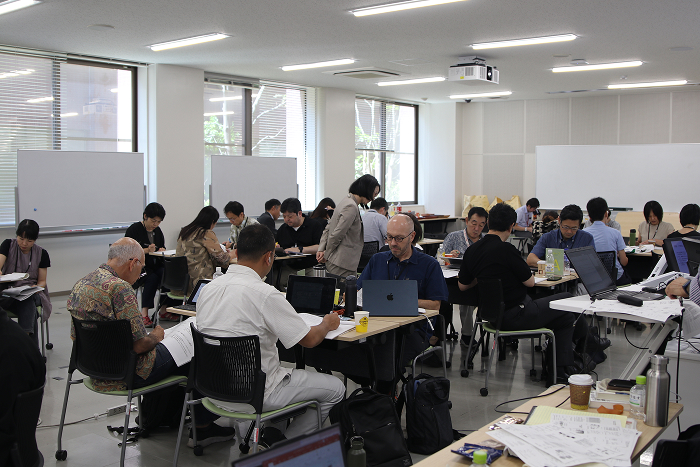
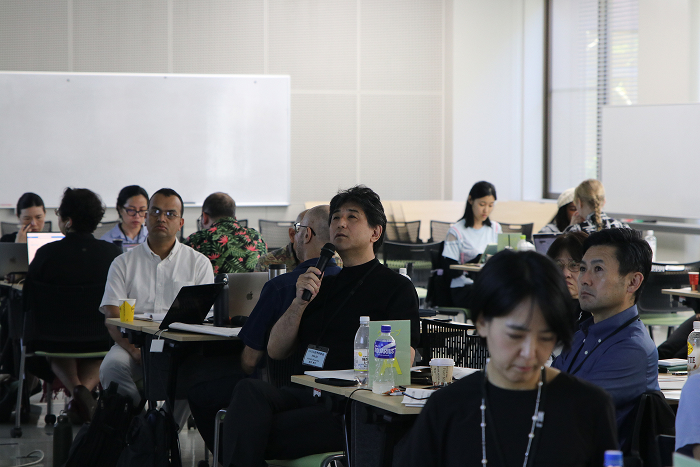
On Friday, July 31, and Saturday, August 1, Ritsumeikan Asia Pacific University (APU) held a training session titled “Systems Thinking—Exploring the Structure of Social Issues” as part of the Support Program for Creating Social Impact. The training was designed to help faculty and staff learn “systems thinking” skills for understanding complex social issues from a structural perspective and addressing their root causes in pursuit of generating social impact. The two-day intensive workshop was attended by a total of 55 faculty members, staff, and graduate students from APU and Kyushu Institute of Technology, with 33 participants on the first day and 22 on the second. Participants joined either in person or online.
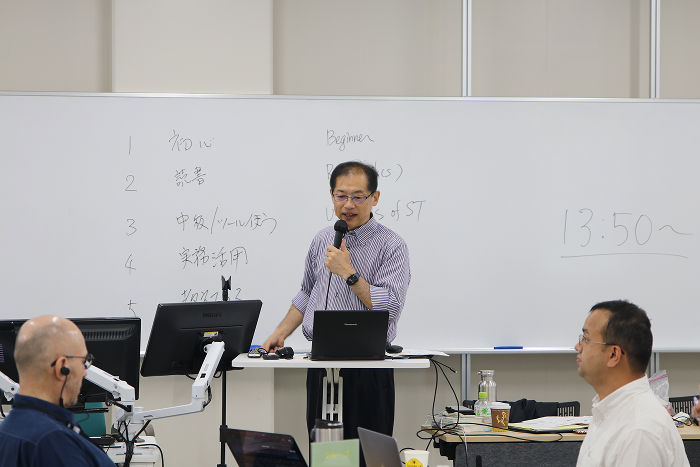
The training session featured Change Agent Inc. President Mr. Riichiro Oda and Senior Executive Manager of the Learning Organization Division Ms. Yukiko Kitami as guest speakers. Participants engaged in experiential learning through a combination of lectures on theory and case studies, individual and group exercises, games, and dialogue.
In Part 1 (Day 1), the instructor explained the theory of systems thinking, followed by case studies of social issues using specific examples. Participants then worked in groups using analytical tools from systems thinking to examine patterns of systemic change and develop a structural understanding of systems. This was followed by individual and group exercises focused on identifying “solutions that do not work” and “points of intervention”.
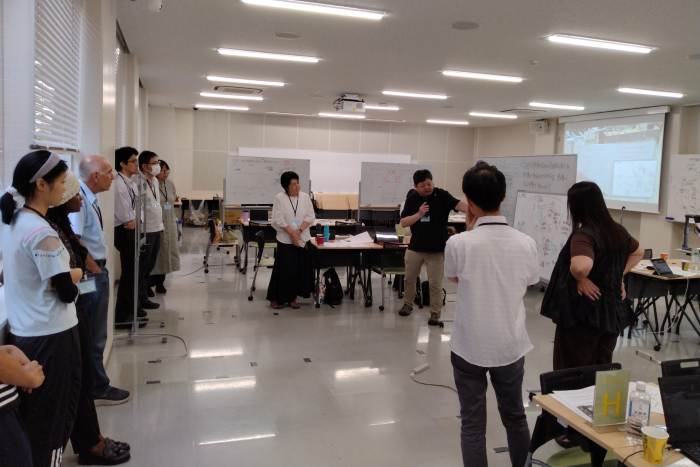
In Part 2 (Day 2), participants reviewed the systems thinking process by experiencing the cycle of improvement and progress through a game-based simulation. The session also included exercises to visualize system patterns and structures, as well as mutual coaching facilitated by the instructors. Through workshops and discussions on high-leverage interventions and the interactions (loops) that create desired patterns, each group presented its findings, providing an opportunity to share the outcomes of the training.
Through the approach and viewpoint of systems thinking, participants strengthened their ability to grasp complex social issues in terms of the interconnectedness and structures of the broader system, thereby developing new perspectives and practical skills for solving social challenges. Participants also shared reflections such as learning the importance of considering not only the problems immediately at hand, but also the structures and causal relationships behind them, and expressing a desire to incorporate these approaches into their classes and other activities.
APU will continue to advance initiatives that enhance the capabilities of its faculty and staff, which are essential for developing human resources in a multicultural co-learning environment.