


 Document
 Inquiry


- Message from the Dean of College
- Mission
- Human Resource Development Goals
- Action Plan
- Basic Information
- International Accreditation
MESSAGE
In this era of rapidly advancing AI technology, the questions of what abilities are unique to humans and how can these abilities be strengthened through university learning are being re-examined.
In the College of Sustainability and Tourism, we aim to cultivate individuals who combine conceptual thinking with practical skills through education that connects academic knowledge with society. We hope that four years of study here will allow you to develop your expertise while providing a solid foundation for connecting the world and local communities through tourism and for shaping a sustainable future for society.
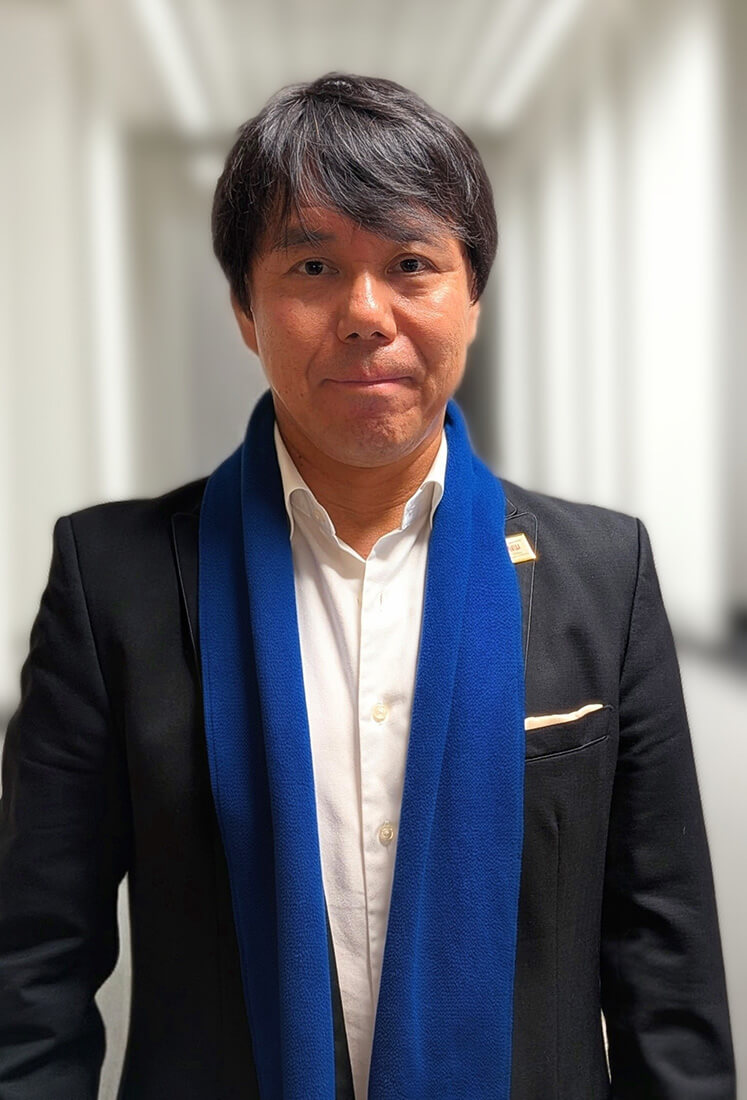
Dean, College of Sustainability and Tourism
Professor KUBO Takayuki
Mission
The college adheres to APU’s core values of freedom, peace, humanity, and international understanding towards shaping the future of the Asia Pacific region. Our faculty and students form a community of scholar-practitioners, who employ academic scholarly knowledge and innovative research to solve contemporary issues and global challenges in sustainable development and tourism.
Human Resource Development Goals
The purpose of the College of Sustainability and Tourism is to develop human resources who can cope with various challenges and act responsibly as a global citizen by gaining a cross-disciplinary understanding of society and regions, acquiring basic and specialized knowledge on the sustainable society and tourism, and learning logical and critical thinking, qualitative and quantitative analysis, problem solving, and communication and collaboration in a cross-cultural environment through curriculum based on sociology in collaboration with various social actors both on and off campus.
Action Plan
1. The teaching of sustainability and tourism studies as interdisciplinary, applied, and integrated learning systems.
2. The promotion of Problem Based Learning (PBL) through cooperation with international communities and industries.
3. Promoting the mobility of world-class students, faculty and staff making full use of the characteristics of APU as Japan’s best international university.
Basic Information
Degree
Bachelor of Sustainability and Tourism
Duration
4 years
International Accreditation
UNWTO.TedQual
The College of Sustainability and Tourism has been awarded the TedQual (Tourism Education Quality) Certification by UN Tourism (formerly the United Nations World Tourism Organization/UNWTO) for the period of February 2026 to February 2030. Through this certification, the College is part of an international collaborative network for education and research in tourism studies.
The Hospitality and Tourism cluster within the College of Asia Pacific Studies first obtained this certification in March 2018. As of its expiry, the certification was renewed under the newly established College of Sustainability and Tourism. APU has been granted re-certification for the longest possible period of four years as a result of the high evaluation of the university's efforts.
TedQual Certification is based on the Global Code of Ethics for Tourism as set forth by UN Tourism—which includes promoting tourism and world peace through tourism, non-discrimination, multiculturalism, freedom of movement, and freedom of employment—ensuring that education and research are conducted in a manner that does not contradict the spirit of the Code. The aim of this code is in line with the academic goals of the University and the College of Sustainability and Tourism. UN Tourism offers a variety of academic and exchange programs to TedQual certified institutions. Thus, as a part of this network, the College will be able to build further connections with universities and institutions and establish agreements for international education and research collaboration.
What is UN Tourism?
The world's largest international tourism body, UN Tourism (previously the United Nations World Tourism Organization/UNWTO) was founded in January 1975 and became a specialized agency within the UN in 2003. It supports the improvement of the status and competitiveness of tourism, the promotion of sustainable tourism, and the promotion of development and poverty reduction through tourism.
For more information visit the UN Tourism website at https://www.untourism.int/.
(External link. Information available in English.)