
 Document
 Inquiry


APU Student Receives Best Student Presenter Award at NERPS 2026
- Award
- International Competition
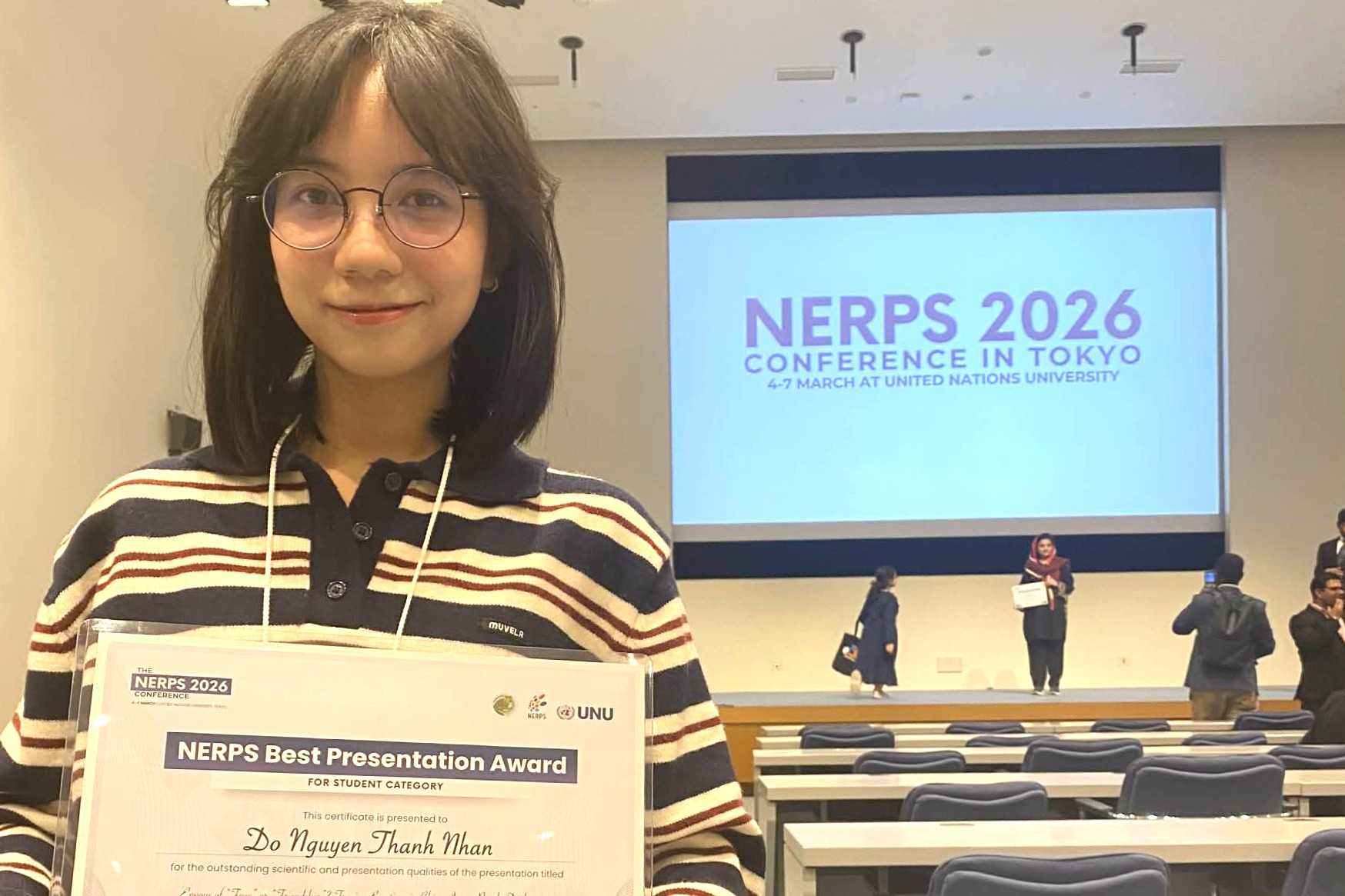
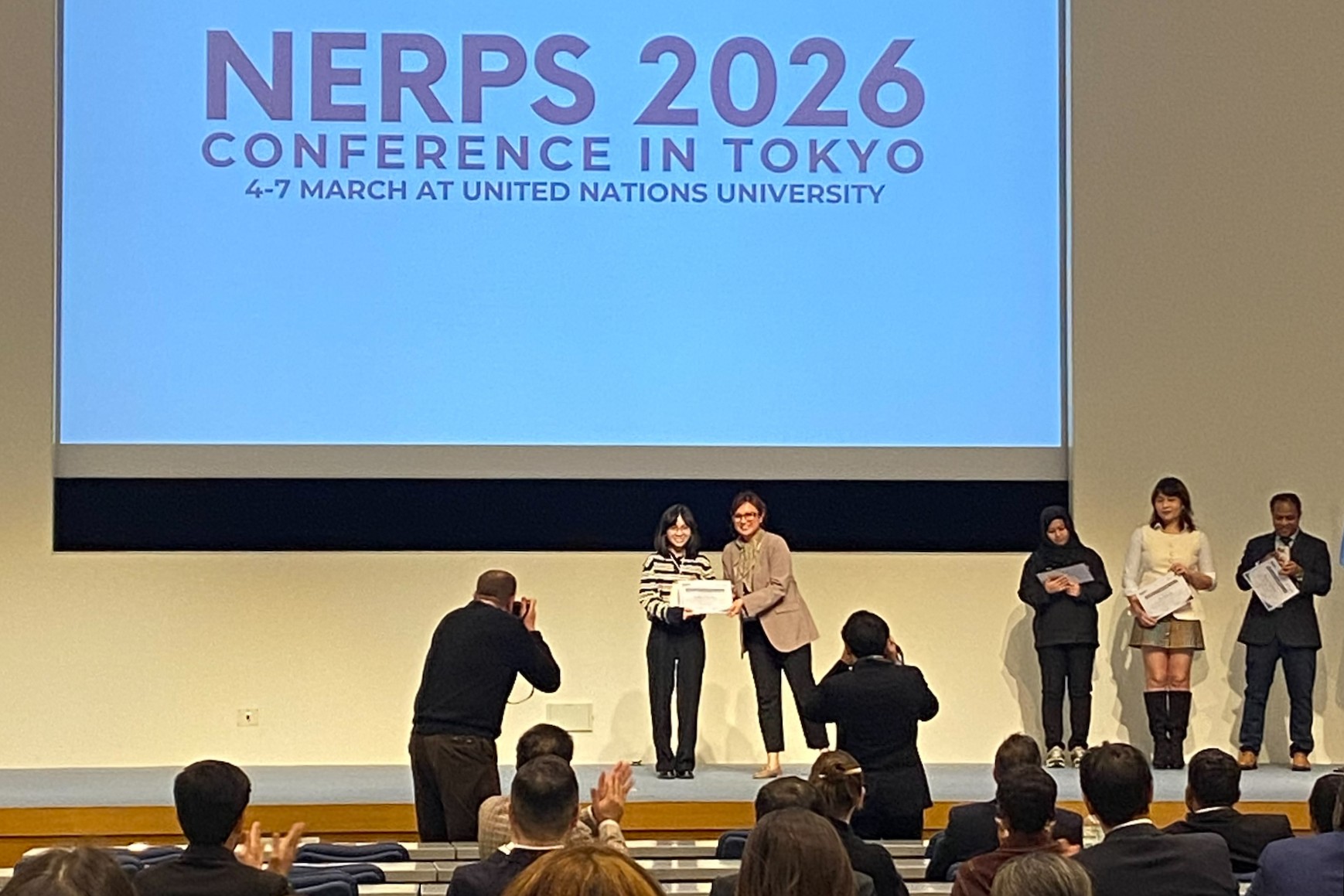
At the international conference NERPS 2026, held over four days from March 4 (Wed) to March 7 (Sat), 2026, at the United Nations University (UNU) Headquarters in Tokyo, Ms. DO Nguyen Thanh Nhan (4th year, College of Asia Pacific Studies, Vietnam) received the Best Presenter Award.
The conference, co-hosted by Hiroshima University’s FE–SDGs Network Hub (NERPS) and the United Nations University, serves as an international platform for dialogue on peace and sustainability through research presentations, roundtables, and workshops. This year’s theme was “Harnessing Technologies for Strengthening Multilateralism on Peace and Sustainability.”
Student presenters from universities around the world were selected through a competitive review process, and Ms. Do was the only undergraduate student among them. Her paper, “Envoys of “Friends” or “Foes”? Emotions and Relationality in China-Japan Panda Diplomacy (1972-2023)” was selected as one of the three award-winning presentations in the student category. Furthermore, during the conference’s closing remarks, Professor Tshilidzi Marwala, Rector of the UNU and United Nations Under-Secretary-General, referenced her work—the only student research mentioned in his address. This presentation was based on Ms. Do’s undergraduate thesis, which she completed under the supervision of Professor CHEN Ching-Chang in his seminar.
Comment from Ms. DO Nguyen Thanh Nhan
I was genuinely so shocked to receive this award that I checked the certificate on stage to make sure it really had my name on it! Being an undergraduate student, I am just so thankful for this honor and for the conversations I had with such amazing scholars and practitioners at the conference. For my presentation, I looked into panda diplomacy. Instead of using standard Western ideas of public diplomacy, I applied Eastern lens to see how China uses these exchanges to send signals and build leverage. It turns out that public emotions and relational power are what makes this diplomacy so influential. One of the most heartwarming parts of the conference was that even after my session, people remembered my topic and came up to me to share photos of pandas and stories from their own countries! It was an unforgettable experience, and I really hope my work helps bring more Eastern perspectives into the study of International Relations.