


Please enter search keywords
2 min read
Have you ever wondered what kind of musical instrument can sound both fragile and powerful at the same time? The answer lies in a traditional Japanese string instrument, the koto, which produces music that carries elegance, depth, and emotion in every note. When I first heard the sound of koto, I was surprised by how it carried gentle yet strong notes through its long wooden body and precisely tuned strings. It was not loud or dramatic, but its unique sound¬, which feels alive and beautiful, left a strong impression on me.
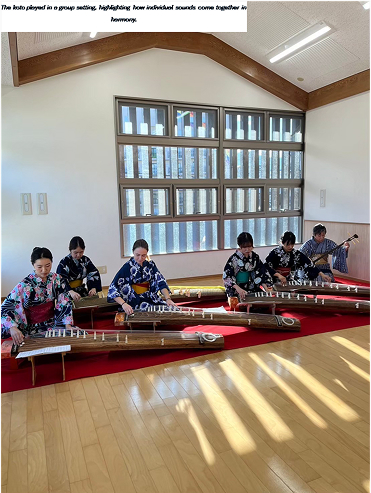
Before coming to APU, I did not have any knowledge about traditional Japanese instruments. My interest in the koto began through a friend at APU who is a member of APU Hogaku, the traditional Japanese music circle. She shared photos and recordings of their practice sessions along with the stories about learning koto. Glimpsing students my age playing these kinds of traditional instruments made me realize that the koto is already a living part of APU campus. The koto was no longer something distant, but rather something that students around me were actively preserving.
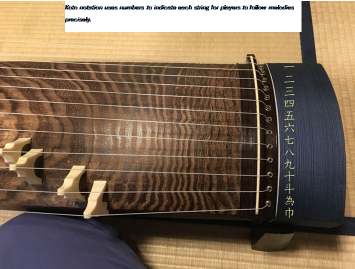
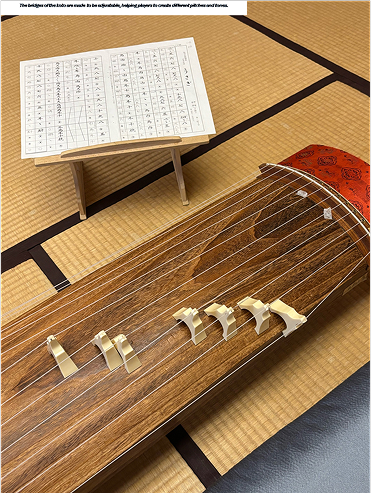
The koto’s history dates back to over a thousand years. It typically has thirteen strings stretched across a long wooden body, and players use fingerpicks (tsume) to pluck the strings and create its unique sound. In earlier times, the koto was only played in the imperial court by men. Later, it became a popular instrument in traditional Japanese music. Even today, it is played in both traditional and modern styles, proving its flexibility and beauty continue to adapt different generations.
After learning about the koto, I started to reflect on the traditional music of my own country, especially the Burmese harp called the saung. Like the koto, the saung carries soft yet richly expressive tones and melodies. Learning about the koto made me more aware that every culture has its own unique form of expression. Seeing APU students preserving the culture of the koto helped me see traditional music and culture as something alive and meaningful to explore rather than something belonging only to the past. My experience of exploring the koto at APU has not only allowed me to appreciate Japanese culture but also rediscover and value my own.
Circles like APU Hogaku are important, especially for an international university like APU. Through the Hogaku circle, students at APU are not only preserving a part of Japanese culture but also demonstrating how tradition can thrive even within an international environment. The koto’s presence on campus reflects how APU strikes a balance between respecting cultural heritage and embracing global exchange. The koto is more than just a musical instrument; it is also a representation of the values that APU cherishes.








Copyright (c) 2016 Ritsumeikan Asia Pacific University


