


Please enter search keywords
3 min read
At APU, students can study six Asia Pacific (AP) languages: Chinese, Korean, Malay/Indonesian, Spanish, Thai, and Vietnamese. I chose Chinese, and this time I had the opportunity to participate in a hands-on program called “Community-Based Experiential Chinese Language Learning in Oita, Japan – From Oita & APU.”
The program brings together APU students and elementary to high school students (and their families) visiting from China on a study tour. Over the course of a week, we interacted, learned together, and explored Oita. One of the program’s biggest features is its strong connection with the local community. Instead of just meeting on campus, we visited various places in Oita alongside our guests, learning about each other’s cultures and societies. A total of 15 APU students spanning all four years participated in the program.Our first stop was the famous Kannawa area in Beppu. At the Beppu Kannawa Jigoku Onsen Museum, we learned about the history and characteristics of hot springs together with our visitors from China.
During a recreation activity in Yufuin, I was surprised to find that one of the games Chinese children often play is very similar to the Japanese game “Daruma-san ga koronda.”
Next, we held a Japanese language lesson. Each APU student paired up with a Chinese participant to teach basic Japanese greetings used in daily life. I was paired with a junior high school boy who had come to Japan alone. While I taught him Japanese, he taught me Chinese expressions. It was a lot of fun learning together.
Chinese has tones, which makes pronunciation challenging. I kept getting corrected (in a good way!), and those moments of trial and error actually brought us closer together.
In Kitsuki City, we had a tea ceremony experience at Wakaeya, a traditional restaurant with over 300 years of history. Hearing the hostess explain the meaning behind each movement left a strong impression, especially seeing how fascinated our Chinese guests were.
While waiting for our seafood BBQ at Kitsuki Terrace, I had long conversations with a Chinese high school girl using a translation app. We talked about her interest in Japan, what she wants to study in the future, and more. Being able to communicate in Chinese made the experience incredibly meaningful. After lunch, we stepped out onto the terrace and learned about the employment of people with disabilities from the staff.
On the final day, we held an APU campus tour. We guided the visitors around campus and introduced our student life—again, using Chinese.
One of my friends, who invited me to join this program, started studying Chinese only after entering APU and has since won an Excellence Award in the recitation division of the All-Japan Chinese Speech Contest. I asked her what she thought of the program:
“I joined because I didn’t want my Chinese studies to end in the classroom. I wanted to actually use the language. APU offers many long- and short-term study abroad programs, but having the chance to use a foreign language right here in Oita is incredibly valuable. Many participants had almost no prior exposure to Japanese, so we started with hiragana. Even so, they picked it up really quickly. I realized this was because they’re used to writing Chinese characters, so copying new characters comes naturally to them. They enjoyed Japanese culture as well, with activities like making rice balls.”
Professor KAWARABATA Kiku, who organized this program, shared that Oita is an ideal place for multicultural exchange because of its rich resources in tourism, nature, and social welfare. Places like Taiyo No Ie and Wakaeya, which we visited, represent what makes Oita unique. I felt that our exchange deepened because we weren’t just using language; we were learning about Oita’s local culture together.
This was the first time the program was held, supported by Ritsumeikan’s Grassroots Practical Support Program, and both faculty and students played an active role in the preliminary meetings and planning. The goal is to continue this initiative as a new way of connecting the community, university, and visitors from China.
APU offers many opportunities to use different languages on campus, but this program was unique in that we interacted with visiting students and families from China while also engaging with the local community in Oita. It greatly boosted my motivation to study Chinese and reminded me how enjoyable it is to actually use what I’ve learned.
One participant told me, “Before coming here, I thought Japanese people were shy and didn’t talk much, but meeting you made me realize that’s not true.”
It made me aware of how easily we form stereotypes and how genuine interaction can overturn them. Experiencing this in Chinese, a language I'm still learning, gave me confidence and made me want to study even more.
This program inspired me to continue learning Chinese and to avail myself of more opportunities that will connect me with the local community.
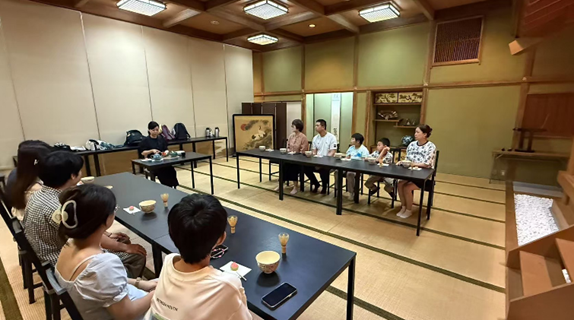
Participants enjoying a traditional Japanese tea ceremony
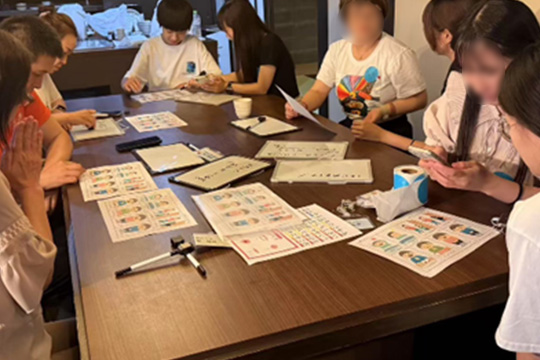
A scene from a Japanese language class
Ritsumeikan’s Grassroots Practice Support Program: A program that supports grassroots, field based initiatives by Ritsumeikan Academy faculty and staff. It encourages activities that cross organizational and professional boundaries and promotes co creation with external partners by incorporating their resources and expertise. This program fosters self-directed and creative projects that contribute to the R2030 Challenge Design, including both collaborative efforts within the Academy and initiatives undertaken with external stakeholders.
Hello! I'm Natsuki, an APS 4th year majoring in International Relations. I hope to inspire you all by sharing my interesting experiences, new discoveries, and encounters at APU. Yoroshiku onegaishimasu!
(Graduated in March 2026)




Copyright (c) 2016 Ritsumeikan Asia Pacific University


