


Please enter search keywords
3 min read
“Your destination is decided by lottery.”
“No smartphones allowed.”
These unique rules define APU’s Off-Campus Program, SECOND. During the main approximately 10-day fieldwork, students travel across Malaysia and Thailand as a team, completing various missions such as reaching randomly assigned destinations and conducting surveys using only their resourcefulness.
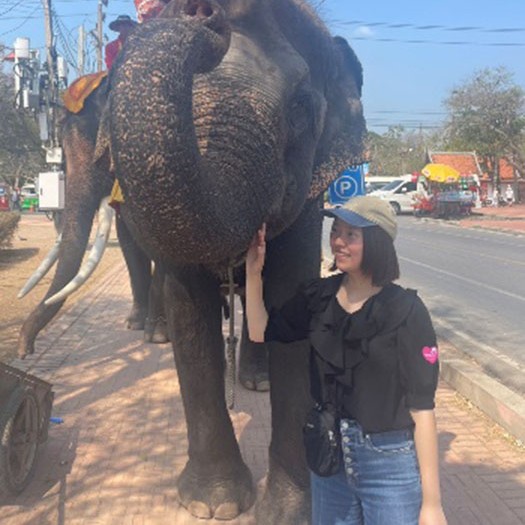
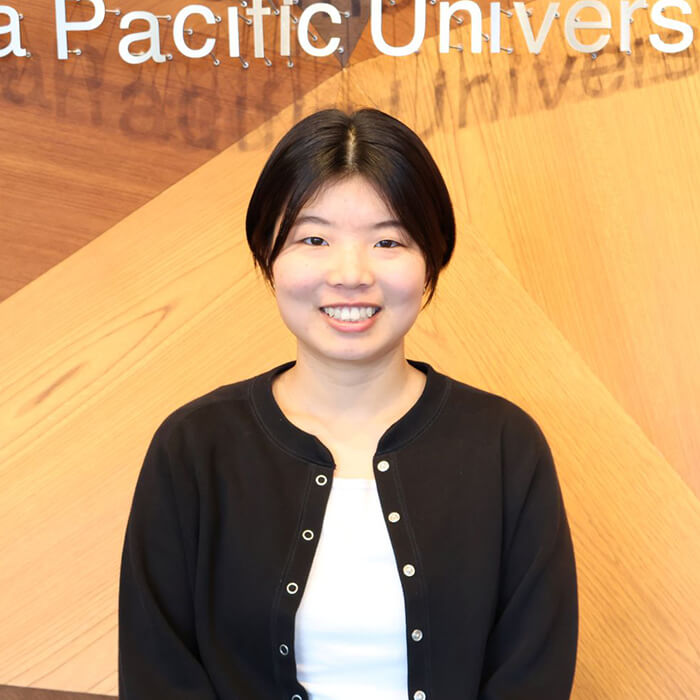
TANAKA Miyu
Second-year student, College of Asia Pacific Studies
I thought it sounded like a true “survival” experience, which really intrigued me. It’s rare to go abroad and conduct surveys, and I was also interested in doing fieldwork in countries where English is not the main language.
Most of all, what really caught my attention was the idea that “destinations are decided by lottery on the day.” I felt like it would push me to develop strong survival skills.
I truly felt the kindness and warmth of people from the bottom of my heart.
For example, when we asked someone for directions to a station in Thailand, instead of simply pointing, they said, “It’s this way, come with me” and guided us all the way there.
Because we couldn’t use smartphones, we had no choice but to ask people directly and communicate as best as we could. Even though our language skills weren’t perfect, people understood us and even went beyond by helping us.
It made me realize what genuine kindness really means. I felt more grateful than I ever had before in my life.
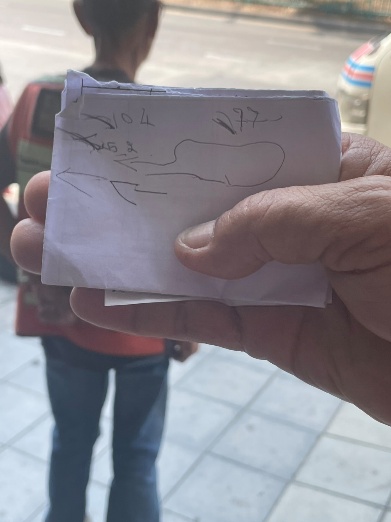
A map an elderly man drew for us when we told him the station we wanted to go to, he sketched it out to guide us.
Surprisingly, communication within our group was the hardest part.
Our group consisted of five domestic students and one international student. I’m not confident in English, but I tend to actively speak anyway. However, some group members hesitated to talk to locals in English, and at times we struggled to interact with the international student.
We once created a rule to separate “Japanese time” and “English time,” but as everyone grew tired, it became difficult to maintain.
Everyone was under pressure in an unfamiliar environment, but we still had to keep moving forward. That mismatch created frustration at times.
After the fieldwork, we had a session where we gave feedback to each other as a group.
We shared our honest feelings, not only appreciation but also our frustrations. Through that, we were finally able to say “thank you” and “sorry” to each other and resolve our issues.
It was also an experience that made me reflect on my own immaturity.
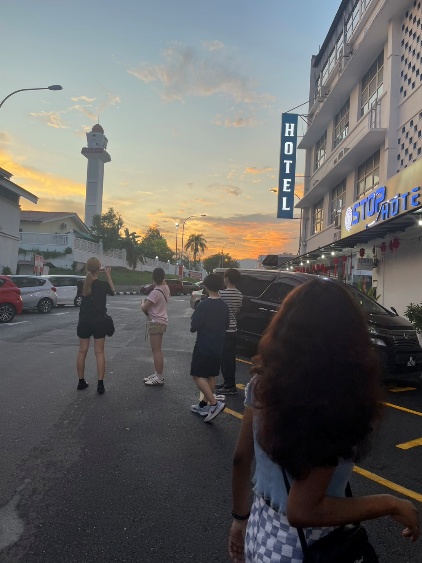
Arriving at our destination, without using smartphones.
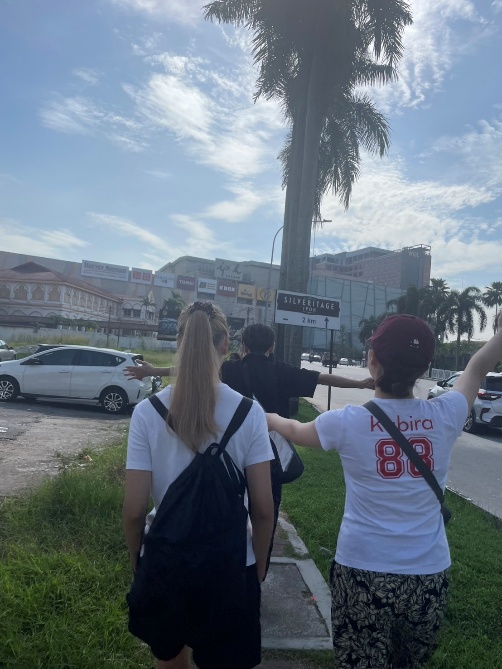
To conduct interviews, we headed to a shopping mall where local people gather.
My group members told me, “You’re really proactive,” and “You’re mentally strong.”
During the program, we often asked strangers to participate in surveys, but many people refused. When I was rejected, I could quickly move on and think, “Alright, next person.” However, some members felt discouraged and became afraid to approach others.
In those moments, I would say, “Let’s do it together,” and go with them.
I had always believed these were my strengths but hearing it from others helped me truly recognize and gain confidence in them.
I think it comes from having a low psychological barrier toward trying new things.
I don’t hesitate to talk to strangers, and I’m not afraid of making mistakes in English. I believe that as long as the message gets across, small grammatical errors don’t matter.
This program allowed me to fully utilize my strengths. At the same time, it made me think about how my strong personality affects others.
It became an opportunity to reflect:
“How can I use my strengths to contribute to the team?”
Through both successes and failures, I was able to accept who I am now, which has given me confidence for my future university life.
I chose this topic because I often hesitate to take on new challenges due to fear and uncertainty. I hoped that this student blog could serve as a hint for others facing the same struggle.
Through this interview, I realized that the SECOND program is not just about cross-cultural experiences, it’s an opportunity to deeply understand both your strengths and weaknesses.
Tanaka’s words gave me a new perspective. As someone who tends to miss opportunities out of fear of failure, I felt strongly inspired.
Taking just one step forward can open the door to new discoveries.
I was also deeply impressed by her reflection that even your strengths can sometimes have negative effects. Rather than seeing it as failure, she used it as a way to better understand herself and how to engage with others.
Just as this experience inspired me to challenge myself and explore new horizons, I hope this article will also encourage you to take that first step.




Copyright (c) 2016 Ritsumeikan Asia Pacific University


