


Please enter search keywords
3 min read
The word conference alone sounds intimidating. Add academic to it, and it suddenly feels even heavier, especially when you imagine scholars, students, feedback sessions, and research presentations all happening in the same space. With that in mind, I nervously decided to register for the AP Conference 2025, fully aware that being surrounded by respected scholars and academics would probably stress me out right up until the day itself. Still, I kept coming back to one thought: How do you grow if you never put yourself in uncomfortable situations?
The AP Conference took place from November 29 to November 30. The first day was mainly reserved for researchers and graduate students, while the second day focused on undergraduate presentations and feedback sessions. I saw the second day as the perfect opportunity to receive input on my thesis paper, which was still very much a work in progress, especially from professors and students from other universities who could view my research from a completely different perspective.
On my way to APU, I was adding some very last-minute details to my slides while standing on a bus that was far more crowded than usual for a weekend. Almost everyone around me was dressed in formal suits, flipping through their materials or quietly rehearsing, and it quickly became clear that the conference was the reason.
The conference was divided into seven presentation slots, with three held on November 29 and four taking place on November 30. I was assigned the first slot on the second day.
The panel included two other presenters alongside me, with Professor KIM Sangho of APS serving as the chair for our session. I was the third and final presenter in the room, which only added to the quiet pressure I was already feeling. The other two presenters in my session were master’s students from other universities. Listening to their presentations, I was overwhelmed by the high level of their work.
My presentation focused on a past and present political analysis of Bangladesh through the lens of mobile financial institutions. Because my research was still in progress, my goal was never to deliver a perfect presentation but to receive feedback that could help strengthen my thesis and support my aim of applying for the Outstanding Thesis Award later on.
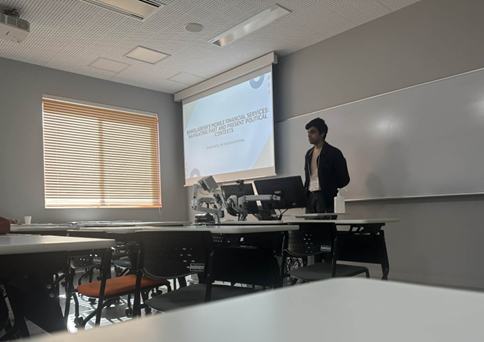
What surprised me most was how supportive the atmosphere actually was. People were genuinely curious about each other’s work, and the questions I received were thoughtful, constructive, and genuinely helpful. Instead of the harsh, judgmental environment I had imagined, the conference felt collaborative and encouraging.
After my presentation, I spent the rest of the day attending my friends’ sessions and sitting in on panels I found interesting.
One that stood out was a panel in the third timeslot of the second day. One of the presentations in this panel focused on environmental well-being and how personality traits relate to greenhouse gas emissions.
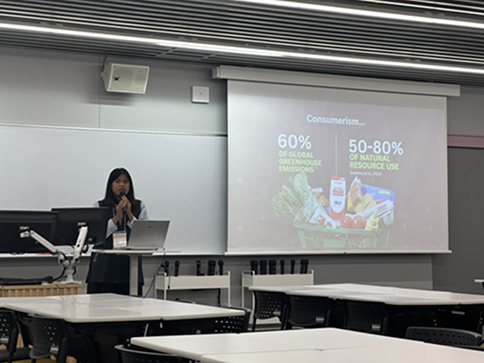
What I found especially intriguing was the idea that extroverts tend to produce more emissions through travel and communication because they are often out socializing, while introverts tend to generate more emissions through food and utilities since they spend more time at home. Moments like this reminded me why conferences never feel repetitive. You walk in expecting heavy theory and walk out surprised by how creative, human, and diverse research can be.
One key takeaway shared by the session chairs was the importance of sample size when aiming to publish research in the academic world. Larger sample sizes significantly improve credibility and strengthen findings on a broader scale, something that many of us as students tend to overlook.
Overall, being exposed to such a wide range of research topics connected to the Asia-Pacific region was eye-opening. More importantly, I realized that just because something sounds heavy does not mean it has to be scary. Much like AP Conference 2025, what I expected to be overwhelming turned out to be an experience that was both grounding and, to my surprise, an absolute blast!
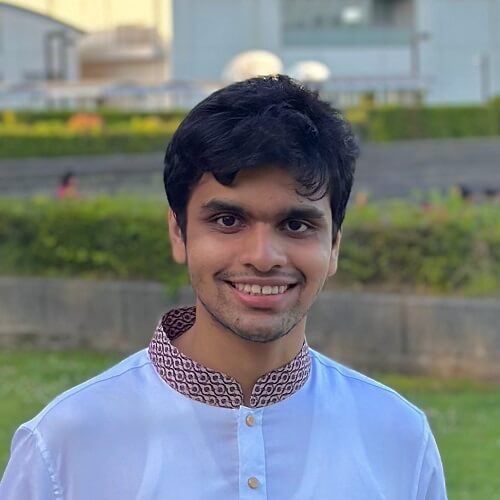
Hello, everyone! I'm Razin, a 4th year APM student. If you enjoy discussing Marxism or reading fictional novels, feel free to say hi when you see me on campus. I'm excited to promote APU through my SPA articles, especially through the perspective of all my peers!
(Graduated in Sept. 2026)




Copyright (c) 2016 Ritsumeikan Asia Pacific University


