


Please enter search keywords
1.5 min read
I spoke with Ridita, a student from Bangladesh, about Nakshi Kantha, a traditional form of embroidered quilting. Nakshi Kantha has been made in Bangladesh for generations. The word “Nakshi” refers to designs or patterns, while “Kantha” means a quilt created by layering pieces of old cloth.
The quilts are mainly made from used saris, the traditional clothing worn by women in Bangladesh. Several well-worn saris, softened through years of use, are layered together and then decorated with embroidery. Even the threads are often recycled.
Creating a single large quilt requires a great deal of time and effort. In the past, women would gather after finishing their farming work and household chores, sewing a quilt together while chatting and enjoying each other’s company. Nakshi Kantha was more than just a handicraft, it also served as an important community activity that brought women together.
However, according to Ridita, this tradition is no longer as common as it once was, as factories can now produce various products quickly and in large quantities. Even so, Nakshi Kantha became widely known both within Bangladesh and internationally after the poet Jasimuddin wrote a book centered on it.
Today, Nakshi Kantha comes in a wide range of styles, from colorful patterns to more subdued tones, and modern designs have become increasingly popular.
By reusing old saris and thread, Nakshi Kantha has long promoted both sustainability and human connection. It reflects not only the wisdom of making the most of available resources but also the warmth of bringing people together.
Traditional crafts do more than preserve culture; by adapting to changing times, they may continue to create new value that remains relevant in the modern world.
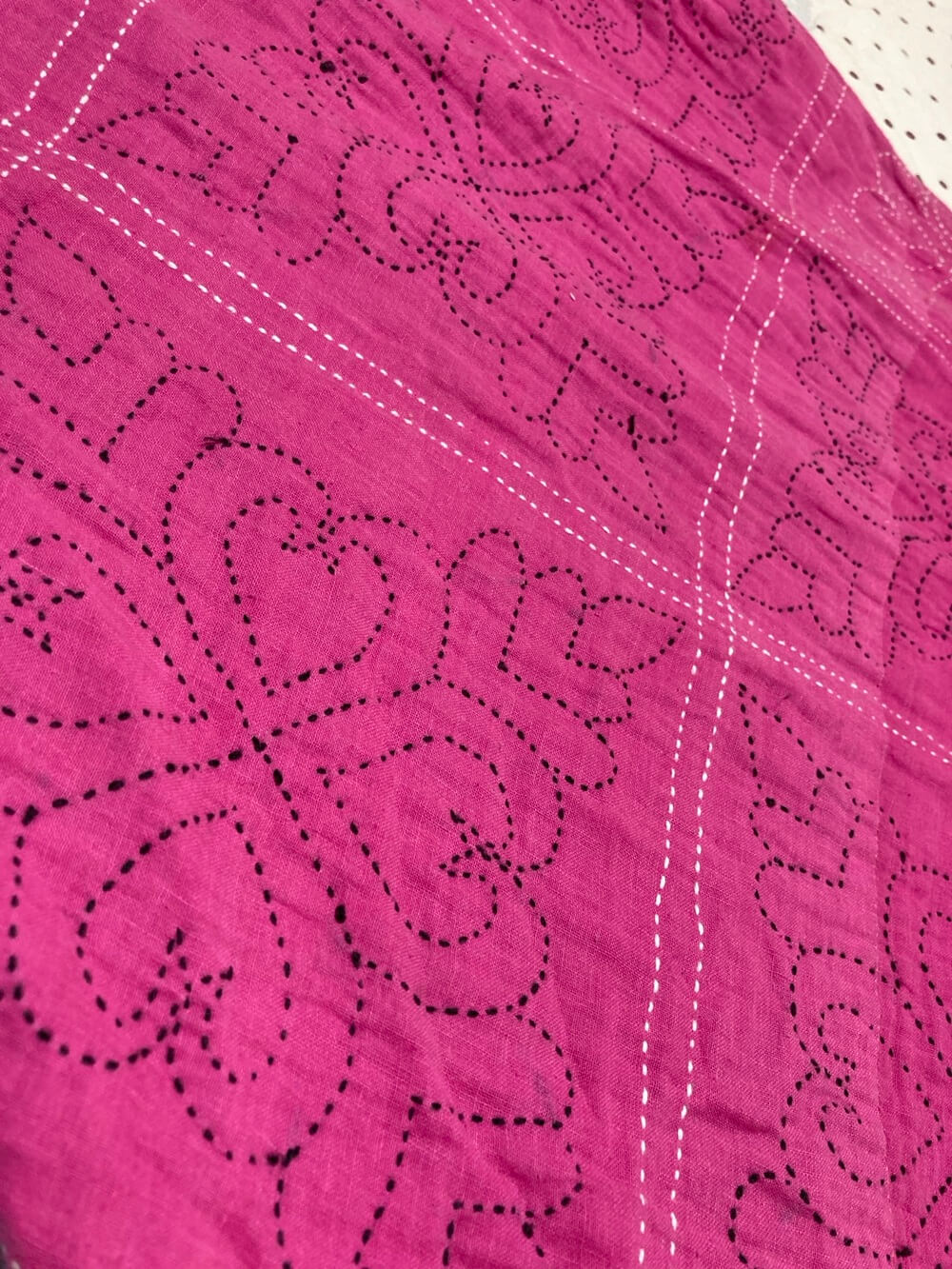
Nakshi Kantha, a traditional quilt made by layering old saris and decorating them with intricate embroidery.

Banik Hridita
Nickname: Ridita
2nd-year student, College of International Management
(Originally published in the morning edition of Oita Godo Newspaper on October 21, 2026)
Based on a comprehensive cooperation agreement with Oita Godo Newspaper, since January 2022, Student PR Assistants (SPA) have been contributing their interviews with international students to the life and culture section of the newspaper’s morning edition. SPA will introduce different cultures and the interesting topics they raise from an authentic, student perspective. These student writers take this opportunity to get the newspaper’s readership and students interested in the world. They also aim to improve their skills with the aid of professional editors.




Copyright (c) 2016 Ritsumeikan Asia Pacific University


