


Please enter search keywords
4 min read
When I started my diplomacy and advocacy journey, I often wondered whether I belonged in that space. I saw diplomacy as distant, something reserved for the few, the confident, the certain, the elite. Even as an International Relations student at APU, I sometimes wondered if I had chosen the right path. I feared controversy, avoided debates, and felt very uncomfortable with disagreement. I thought diplomacy demanded certainty, authority, and confidence, all of which I did not yet possess.
Then, from 20 to 22 August 2025, I suddenly found myself seated at the 9th Tokyo International Conference on African Development (TICAD9) at Pacifico Yokohama, participating as a speaker and not just an observer.
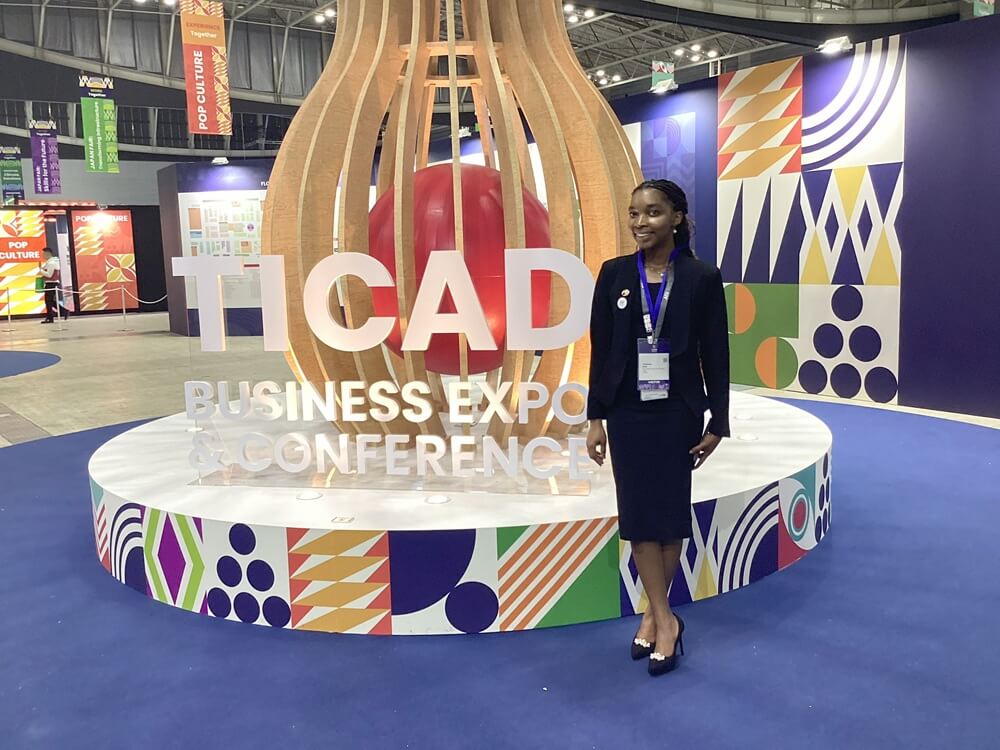
TICAD9 brought together policymakers, corporate leaders, academics, and youth to discuss Africa–Japan cooperation. APU hosted a symposium under the theme of multicultural coexistence and the value brought by highly skilled African professionals. I was invited to contribute as a student panelist alongside APU's Vice-President Yoshifumi Okamura, professors, students, and alumni. We shared our perspectives on youth leadership and Africa–Japan human resource exchange.
Listening to our panel's discussions on diversity, partnership, and globalization, I recognized concepts from my classes at APU, concepts like multilateral cooperation, development models, and global governance. This was not a classroom simulation. These conversations had real consequence and direction.
I witnessed my International Relations studies unfolding before my very eyes for the first time.
My most memorable moments were during a panel organized by the Japan Association of Corporate Executives (Keizai Doyukai) on "The Cost of Inaction". I shared the stage with senior government officials, corporate leaders, and representatives from organizations working on Africa–Japan cooperation.
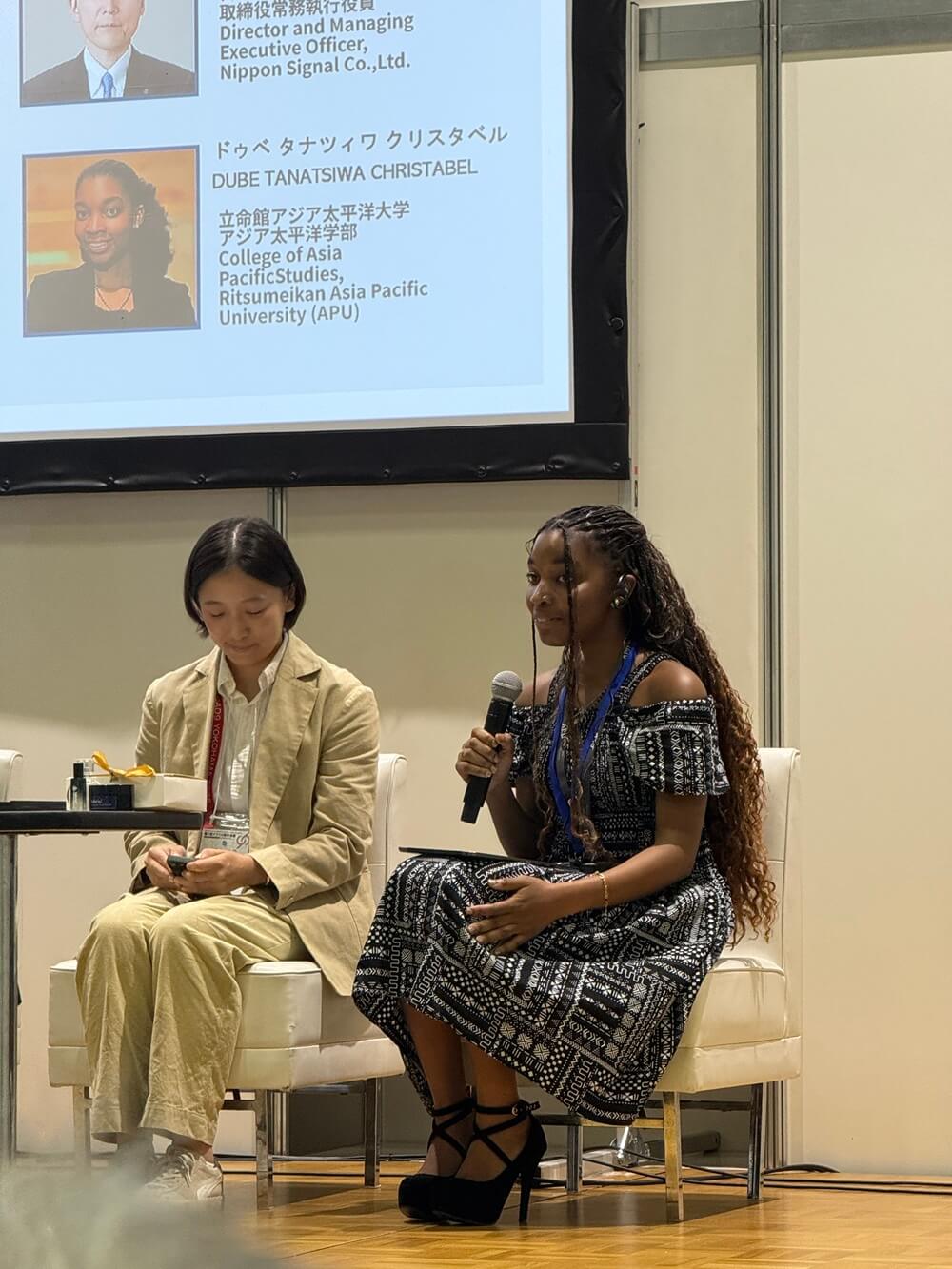
As a first-year student, speaking in still-growing Japanese, I addressed the idea of the cost of inaction and brain-drain gaps in Africa–Japan relations. I spoke about what happens when tokenism replaces impact and when youth are treated as beneficiaries instead of co-creators. Sitting beside senior officials and executives, I felt growth, not because I had mastered diplomacy, but because I was actually participating in it.
During the discussion, I introduced my startup, Tahris, and discussed how youth entrepreneurship can connect continents. I shared how business and human resource exchange can create mutual progress instead of dependency. That connection between policy, youth leadership, and innovation is where I aspire to work. In addition to these discussions, I also had the amazing opportunity to meet South African President Cyril Ramaphosa and Botswana Vice President Ndaba Nkosinathi Gaolathe, with whom I had conversations.
For years, I have aspired to become an African Union diplomat, particularly in the Women, Gender and Youth Directorate. That ambition has influenced my leadership roles, advocacy work, and entrepreneurial journey. At TICAD9, I did not just imagine that future. I touched it.
Through TICAD9, I learnt that diplomacy is about entering multifaceted conversations with humility, listening with intention, and speaking with clarity. It is about courage in participation and collaboration instead of dominance and certainty.
And APU prepared me for that space.
Our Multicultural Cooperative Workshop classes have trained me to engage across difference. Group projects have taught me that leadership requires collaboration instead of hierarchy. My daily life on campus has shown me that coexistence is practiced. By the time I stepped onto that TICAD9 stage, I had already prepared for it through discussions, disagreements, and the diverse perspectives within the APU community.
Across the conference, I also watched fellow APU students participate in the Model African Union and manage the university's exhibition booth. APU hosts one of the largest African student communities in Japan. At TICAD9, that presence was even more apparent. We did not just attend, but also contributed to dialogue that connects the wider international community.
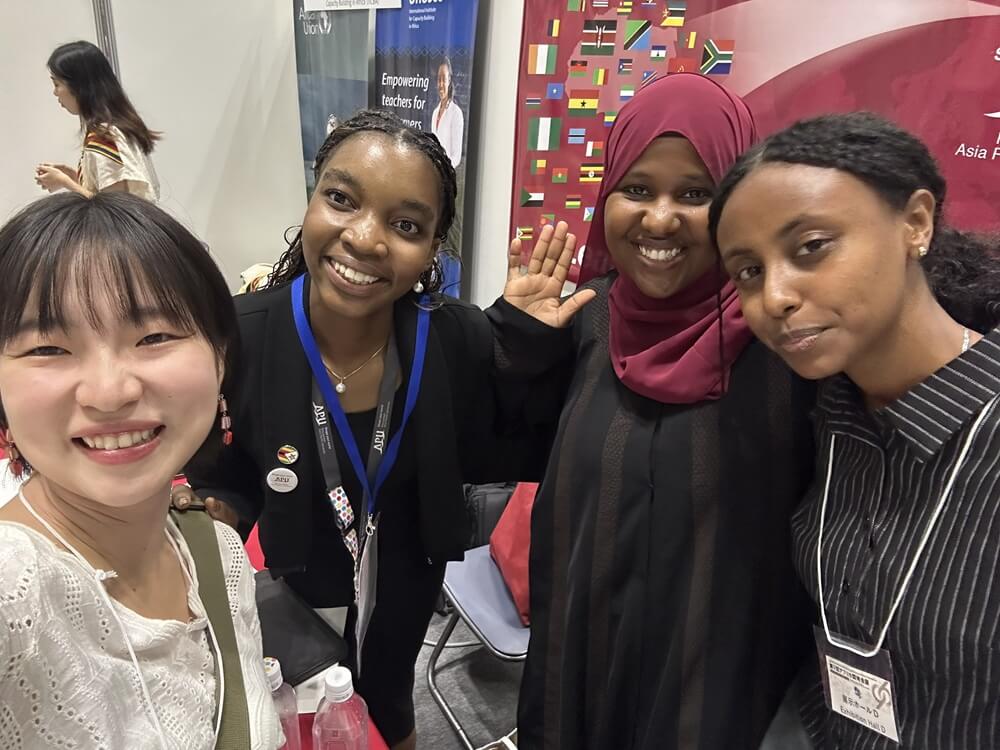
I discovered that studying International Relations at APU is not about analyzing systems from afar, but actually stepping into them. It is about recognizing that youth voices matter in rooms where policy is discussed. It is about understanding that leadership begins with participation.
TICAD9 affirmed my direction. My future diplomacy aspirations are no longer as distant. They feel achievable, especially with the community and opportunities APU makes possible, ones which you can find, learn, and grow from as well!




Copyright (c) 2016 Ritsumeikan Asia Pacific University


