


Please enter search keywords
イベント|25周年
Feb 19, 2026
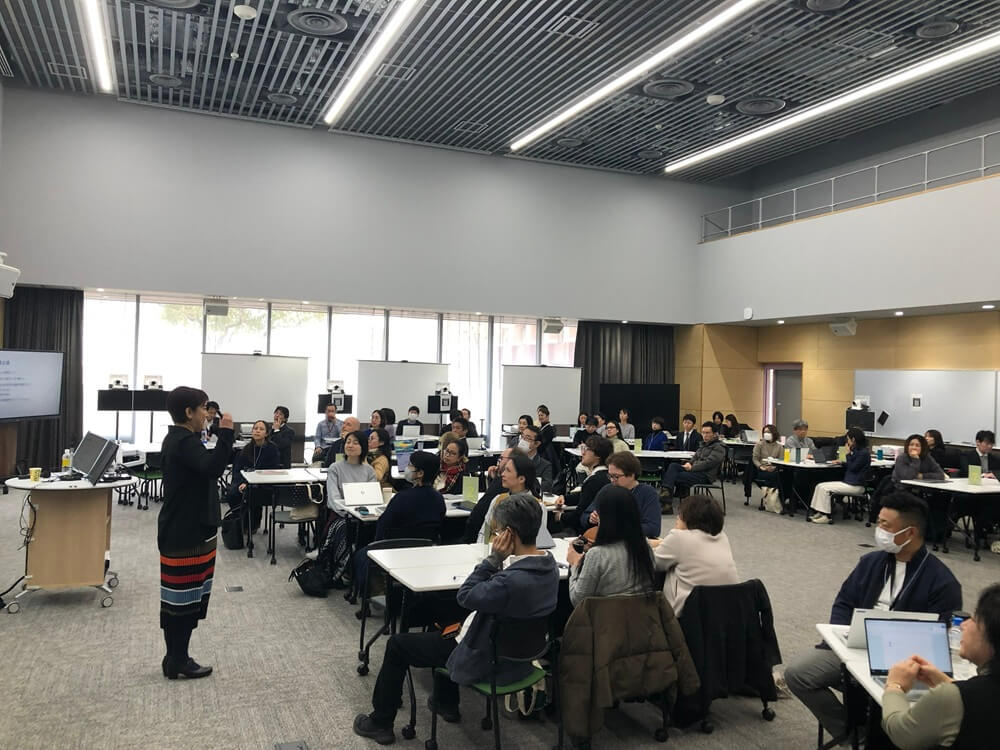
On Monday, December 15, Ritsumeikan Asia Pacific University (APU) held an Intercultural Sensitivity Workshop as part of its 25th anniversary commemorative initiatives. Based on APU’s educational vision and aiming to realize education and organizations that leverage diversity, the program welcomed approximately 150 participants from both within and outside the university, including educators, local government officials, corporate representatives, and alumni, who joined either in person or online. The workshop also served as a joint faculty and staff development (FD/SD) program with the Kyushu Institute of Technology, playing a role in promoting multicultural collaborative education.
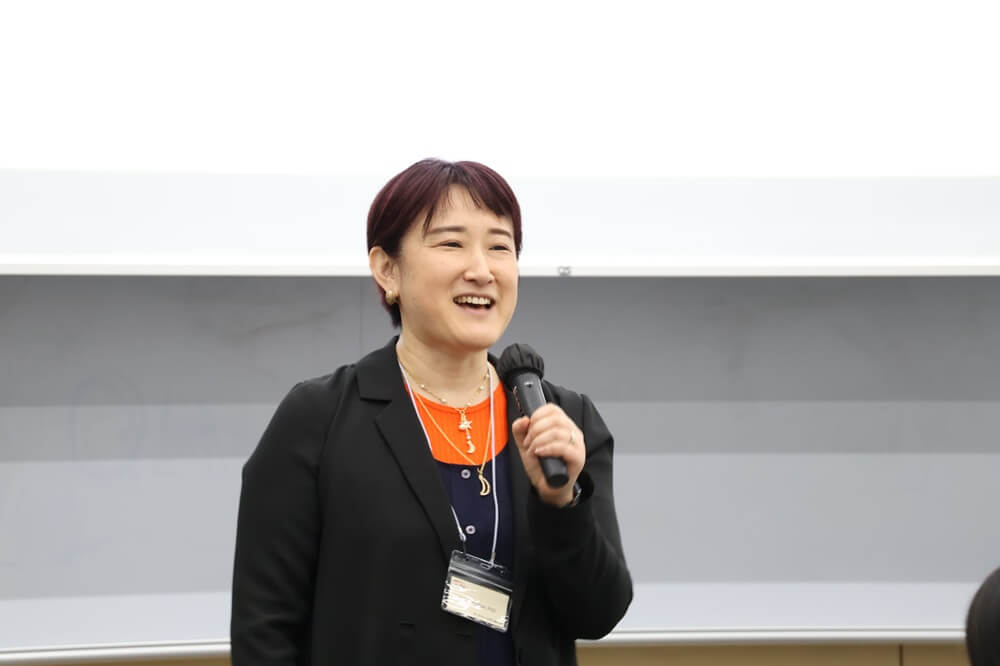
The program was led by Dr. Akiko Maeker, Senior Trainer for the Intercultural Development Inventory (IDI) and CEO of Interculturalist LLC in the United States. It consisted of three parts: a theoretical session, an application session based on theory, and individual consultations.
In the first part, Dr. Maeker introduced the intercultural development continuum and clearly explained its five stages—Denial, Polarization, Minimization, Acceptance, and Adaptation. Participants then engaged in activities to deepen their awareness of their own intercultural sensitivity. As an example, Dr. Maeker compared the “coffee experience” of beginners and connoisseurs, highlighting differences in how aroma and flavor are perceived, and she explained that intercultural sensitivity similarly develops through intentional and accumulated experiences, increasing one’s capacity for understanding.
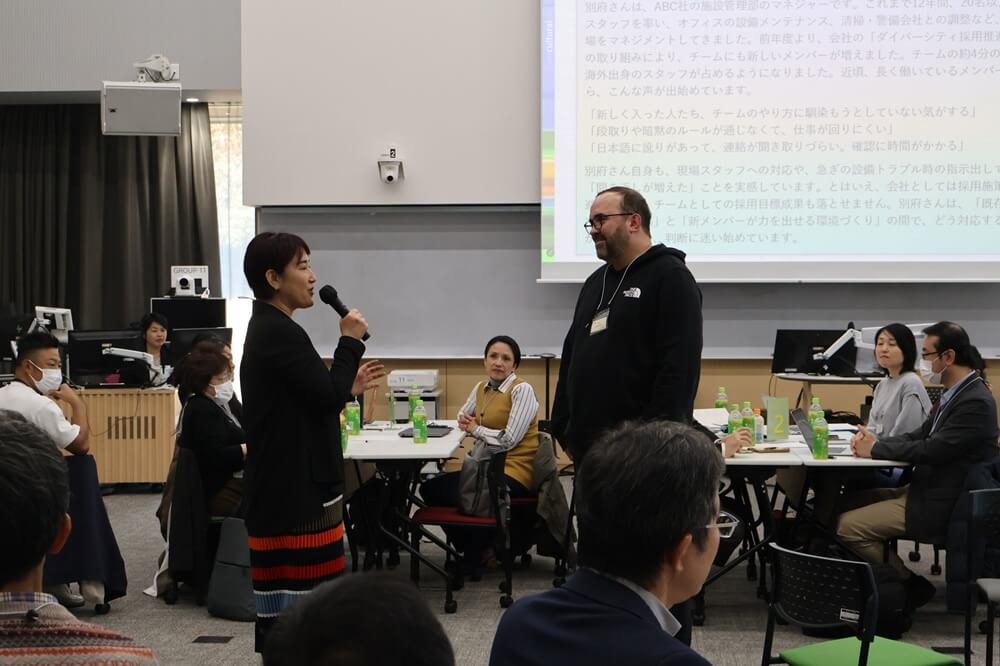
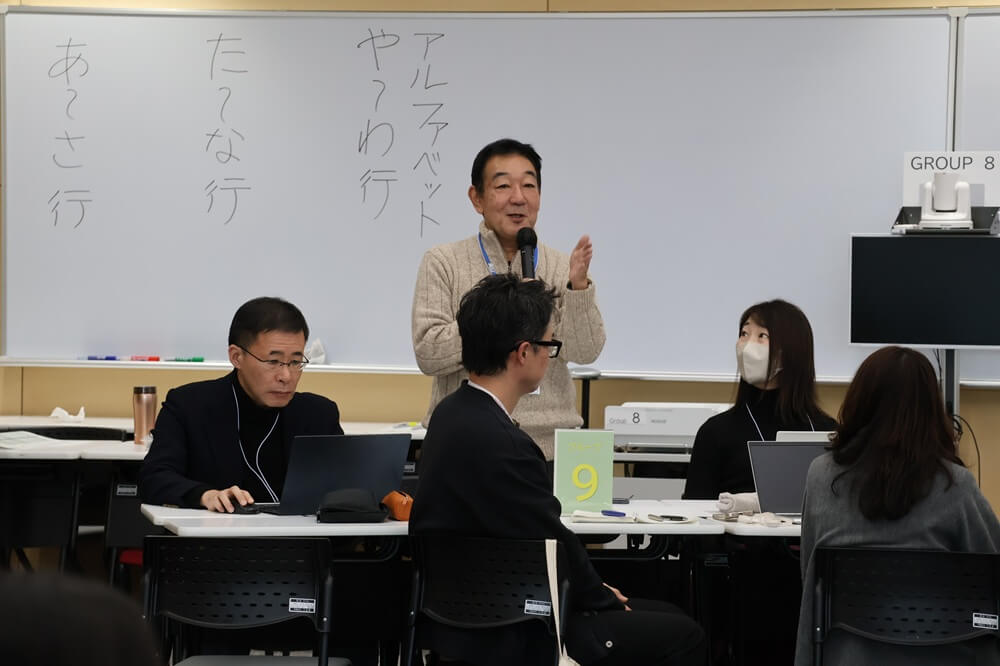
The second part focused on applying the theory through case studies addressing issues arising from diversity. Representatives from each group performed demonstrations based on the stages of the intercultural development continuum, and then received feedback from Dr. Maeker. Through this exercise, she emphasized that discussions within organizations are influenced by the “developmental diversity” of participants and highlighted the importance of recognizing this factor. She also encouraged participants to understand both the similarities and differences between themselves and others and to proactively choose how to engage with others. In the third part, individual consultations were held based on topics requested by participants.
This workshop allowed participant to reexamine their everyday conversations and interactions from the standpoint of intercultural sensitivity, thereby deepening their understanding of how differences are perceived, their impact, and developmental processes. Feedback from participants included reflections such as the importance for those who support students to intentionally create opportunities for understanding oneself and others and realizations about gaps between one’s awareness and actual behavior, thus reinforcing the desire to continue focusing on the pursuit of development and growth.
APU will continue to share with society the knowledge it has cultivated in multicultural and diversity education since its founding, and it will further promote mutual understanding and co-creation in education, organizations, and local communities.






Copyright (c) 2016 Ritsumeikan Asia Pacific University


