


Please enter search keywords
社会貢献|イベント|SDGs
Dec 18, 2025
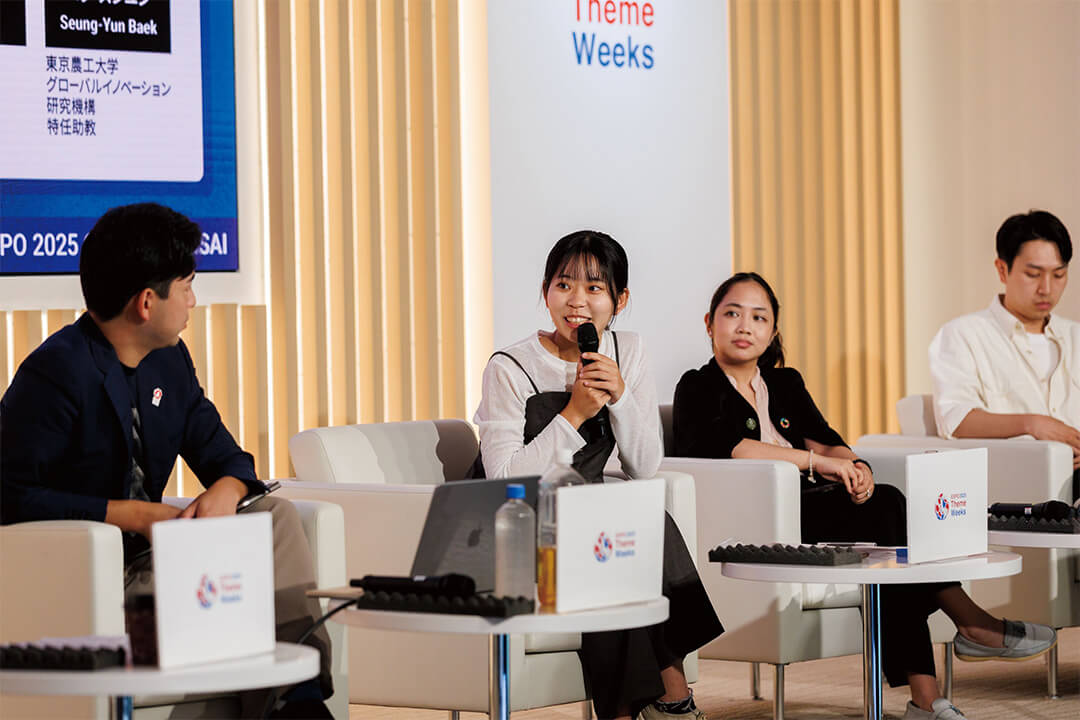
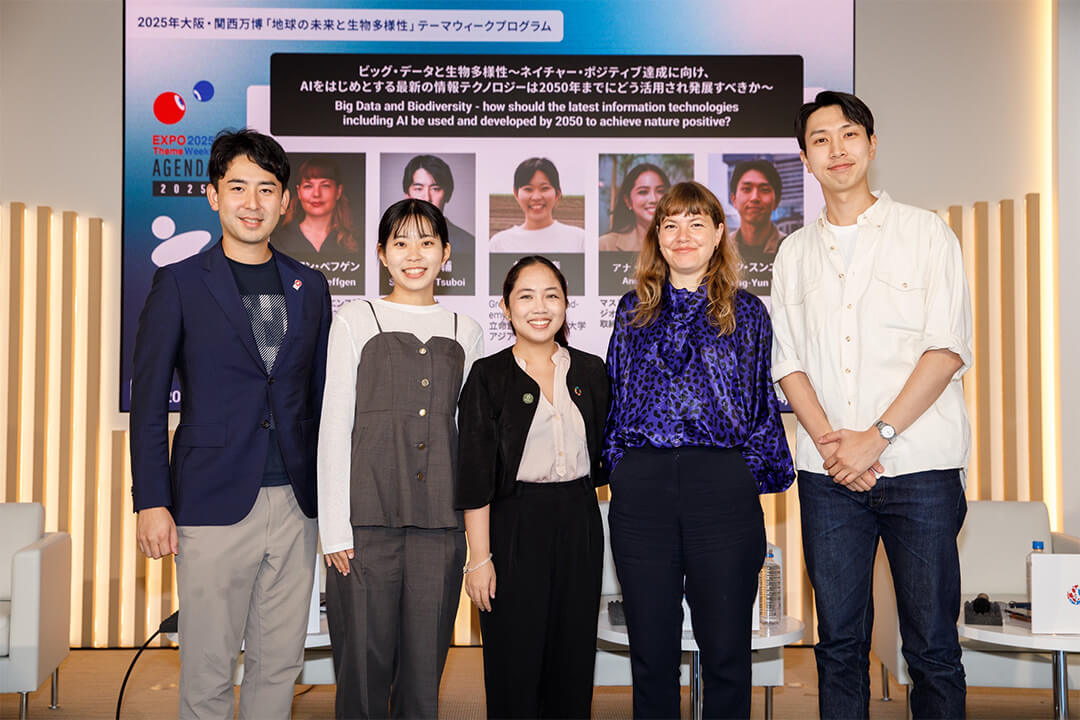
On Saturday, September 27, 2025, Wakana Inoue (College of Asia Pacific Studies, 4th year) took the stage at an Agenda 2025 Co-Created Program event held at Expo 2025 Osaka, Kansai, Japan. The international session entitled “Big Data and Biodiversity—how should the latest information technologies including AI be used and developed by 2050 to achieve nature positive?” brought together four leading young voices from around the globe to discuss the future of biodiversity conservation.
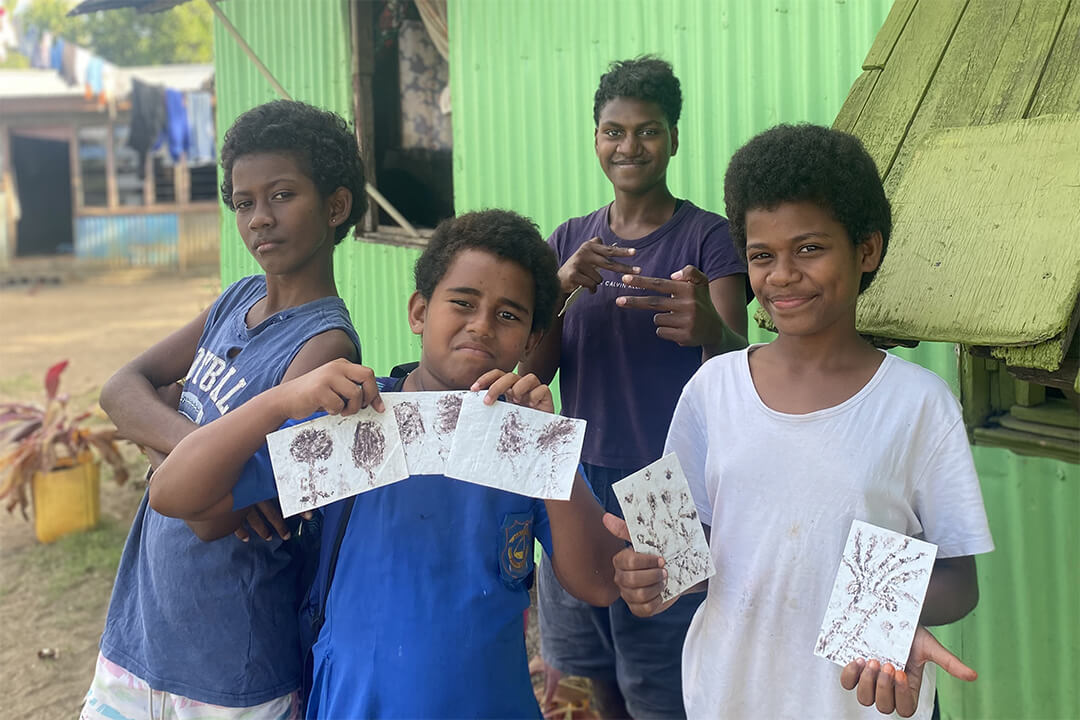
The discussion focused on how rapidly advancing AI and information technologies should be applied to nature conservation and social design by 2050, amid an unprecedented biodiversity crisis. Ms. Inoue opened the session by outlining the benefits and limitations of big data and AI, drawing on her own initiatives. Based on her experience in mangrove conservation in Fiji and Kiribati, she emphasized that while satellite data is effective for assessing the health and growth potential of reforestation areas on a large scale, it cannot replace local experiential knowledge and should only serve as a tool to support on-the-ground efforts. Ms. Inoue stressed that when deciding where to plant trees, the intuitive judgment of local residents should come first, with data used only to complement those insights. She also introduced her unique project of producing crayons from fallen mangrove leaves and reinvesting the sales revenue into reforestation, noting that visualizing the joy of participation can itself become a driving force for sustaining such activities.
Other speakers highlighted the advantages of AI, such as pattern visualization, early warning systems, and efficient resource use, while also pointing out challenges including energy consumption, privacy concerns, and regional disparities. The session concluded with a shared understanding that technology should serve as a tool for coexisting with nature and that designs should connect quantitative data with human sensibility. Participants expressed their commitment to concrete actions after the Expo, such as providing data in ways meaningful to local communities, establishing governance frameworks, advancing ecosystem monitoring through integrated AI and satellite technologies while minimizing environmental impact, and promoting education and outreach to implement nature-positive solutions in society.
Footage of the session is available on the Expo 2025 Theme Weeks website.
Ms. Inoue has been working to create a sustainable mangrove reforestation system in Fiji, a Pacific island nation vulnerable to climate change. Traditional reforestation efforts often rely heavily on corporate or NGO support, but Inoue launched a crowdfunding campaign to build a self-sustaining cycle. Using the funds raised, she developed a unique model, producing and selling crayons made from fallen mangrove leaves and reinvesting the profits into reforestation. This initiative not only contributes to environmental conservation but also enhances the economic and social well-being of local communities. Women in the community participate in crayon production, while children help collect leaves—creating a collaborative system that grows alongside the community.








Copyright (c) 2016 Ritsumeikan Asia Pacific University


