


Please enter search keywords
連携事業|講演・シンポジウム|イベント
Mar 4, 2026
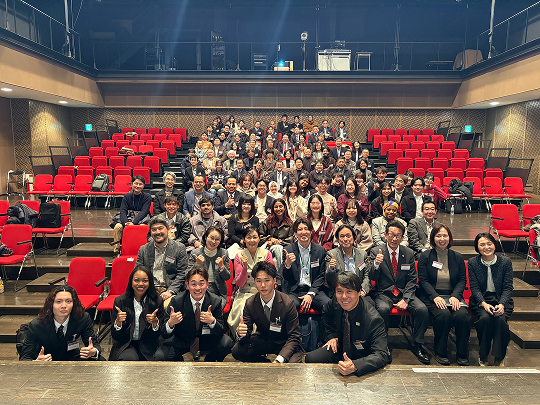
On Wednesday, January 28, 2026, the College of Sustainability and Tourism Community (STC) held its annual symposium and networking meeting at J:COM Horuto Hall Oita in Oita City. This event has been organized every year since the launch of the College of Sustainability and Tourism, making this the third installment.
The College and STC partner organizations have collaborated in a wide range of activities, including guest lectures in university courses, fieldwork-based research, and community development initiatives. At this year’s event, we reported on the outcomes of the third year’s activities to participating partner institutions, companies, and students.
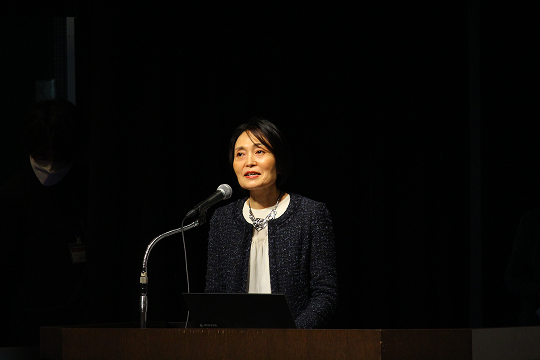
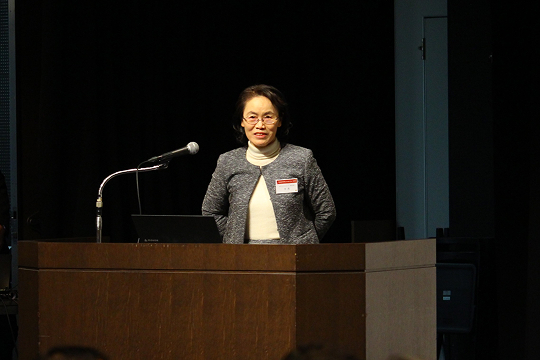
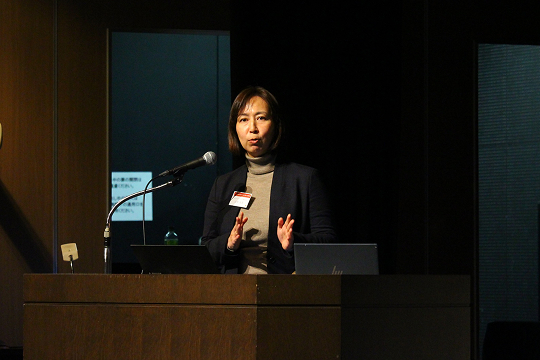
The symposium began with opening remarks from Ms. Naoko Ishii, General Manager of Convention Linkage, Inc. Oita Branch, followed by Dean LI Yan of the College of Sustainability and Tourism.
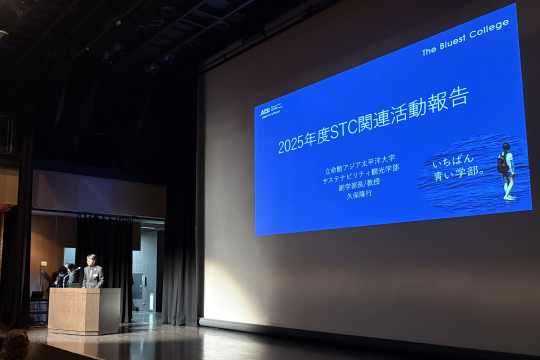
Professor KUBO Takayuki, Vice Dean of the College, then presented an overview of major initiatives undertaken through STC this year, including fieldwork activities. He also expressed gratitude for the continued support from STC partner organizations and companies.
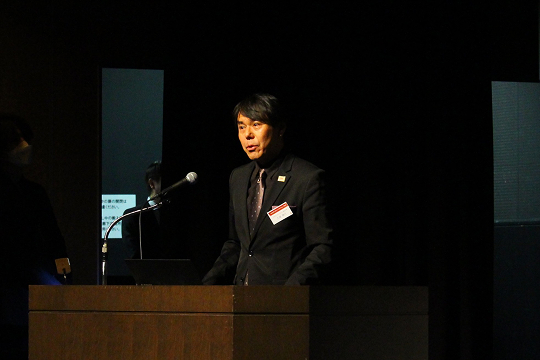
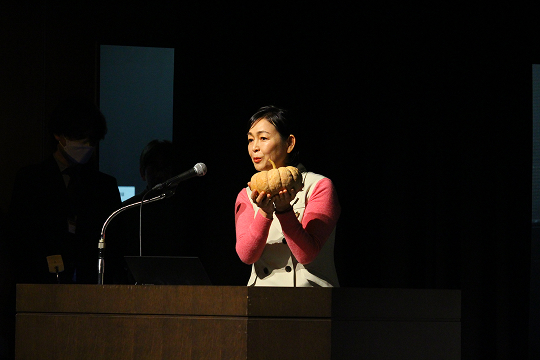
The first presentation was given by Visiting Professor Naomi Zaizen, who reported on cultivation projects involving local plant varieties such as the Sourin Kabocha (a traditional Oita pumpkin) and Shiro-nasu (a rare variety of white eggplant native to Oita). Having succeeded in harvesting these crops—despite their reputation for being difficult to grow—Prof. Zaizen introduced the harvested Sourin Kabocha, which drew applause and excitement from the audience.
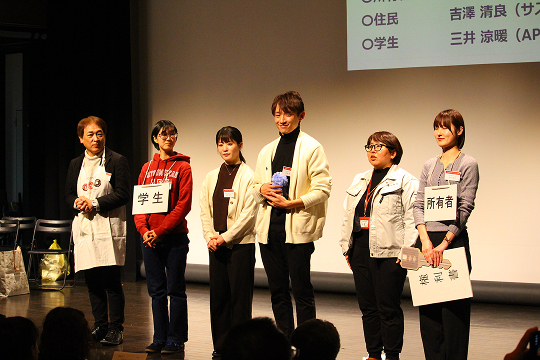
Next, Professor YOSHIZAWA Kiyoyoshi, along with representatives from the Oita Prefectural Government’s Urban and Community Development Promotion Division (Mr. Tatsumoto and Ms. Kikugawa), the Beppu City Urban Planning Division (Mr. Ono and Mr. Kitagaki), and APU student Ms. Mitsui, presented their collaborative efforts addressing Oita Prefecture’s vacant house issue. Using a humorous skit to illustrate common patterns in vacant house management, the presenters filled the venue with laughter. They also introduced a uniquely Beppu-like case in which natural hot spring water emerged from underground in the yard of a vacant home—showcasing the challenges and opportunities in a city rich with hot spring sources.
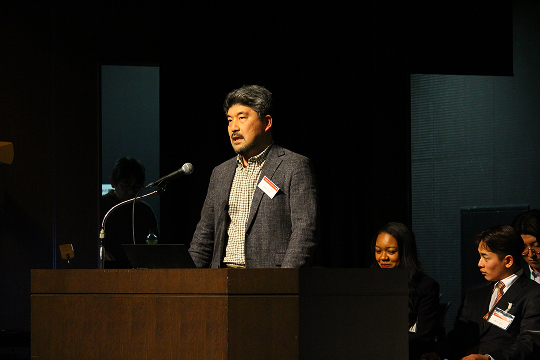
Following this, Associate Professor KANO Eiji, together with representatives from Hiji Town Hall (Mr. Kajiwara and Mr. Sato) and APU students (Ms. Sato, Ms. Seshimo, Ms. Soeda, and Ms. Motono), shared the “Hiji-machi Station Market” initiative, a student-led project aimed at addressing local issues in Hiji Town. The project focused on supporting local agriculture and revitalizing Bungo-Toyo’oka Station. Students presented their process of sourcing vegetables and eggs from local producers and selling them at the station. Mr. Kajiwara offered warm words of praise for the students’ growth through the project.
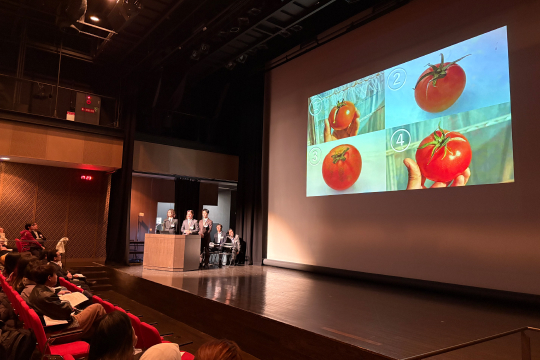
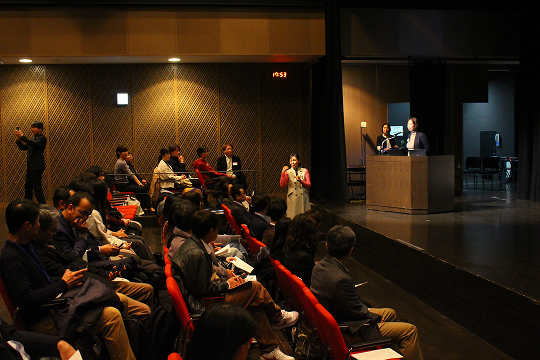
In the latter half of the symposium, Associate Professor YAMANE Tomomi moderated an open discussion on the theme “Redefining the Role of Universities.”
Responding to Prof. Yamane’s question—“How can universities diversify value creation by functioning not only as institutions for education, research, and social contribution, but also as think tanks, consulting bodies, and testbeds for problem-solving?”—participants shared multiple perspectives. One view emphasized that universities should play a key role in creating environments that enable students to collaborate directly with local communities to tackle real-world issues.
The session concluded with these insightful discussions, offering valuable perspectives on the evolving role of universities and bringing this year’s symposium to a meaningful close.






Copyright (c) 2016 Ritsumeikan Asia Pacific University


