


Please enter search keywords
受賞
Jun 17, 2026
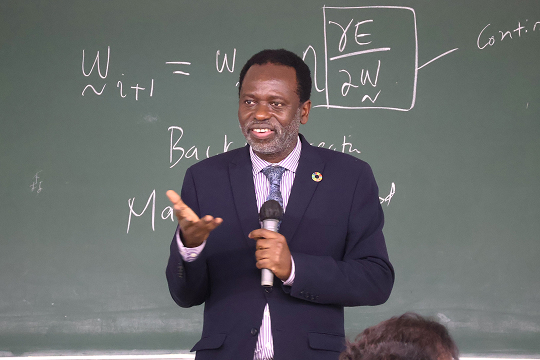
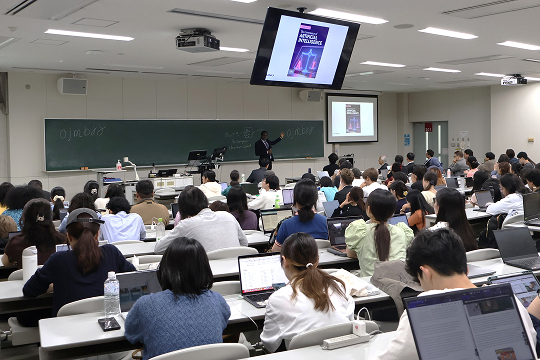
On Monday, June 8, 2026, a special lecture titled “AI and Global Resource Management” was held during the “Resource Management” class taught by Professor Han Ji of the College of Sustainability and Tourism, featuring Dr. Tshilidzi Marwala, Rector of the United Nations University, as a guest speaker.
At the beginning of the lecture, Dr. Marwala provided an overview of the fundamental characteristics of AI and its social impacts. He emphasized that while AI is a powerful technology that can contribute to achieving SDGs, it has limitations and cannot solve social challenges on its own. He pointed out the necessity of comprehensive approaches and stressed the importance of governance for the proper use of AI, including policy frameworks, legal systems, and international cooperation.
Throughout the lecture, it was also highlighted that AI is a technology that consumes significant amounts of both physical and non-physical resources. Dr. Marwala discussed examples such as rare earth elements essential for semiconductor manufacturing, as well as tangible resources like land and electricity required for operating data centers. In addition, he addressed the importance of intangible resources such as data and computational power, demonstrating how the development of AI is closely linked to resource utilization and environmental impacts.
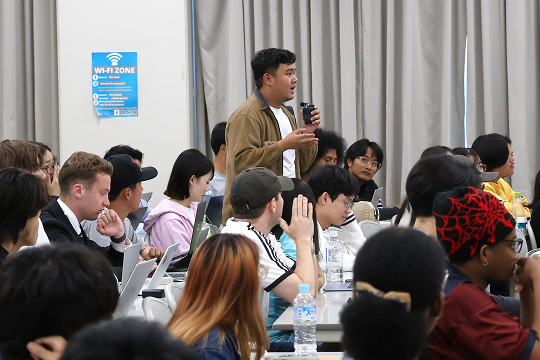
In the latter half of the session, an active Q&A discussion took place, covering topics such as the development of AI in the Global South and the environmental impact of data centers on local communities. In response, Dr. Marwala highlighted the importance of the “Global Digital Compact” and the need for sustainability oriented technological development. He also noted that in the age of AI, uniquely human qualities such as ethical judgment and empathy will become increasingly important.
Through this lecture, students gained a deeper, multifaceted understanding of the relationship between AI and resource management. It also provided a valuable opportunity to reflect on how technology should be utilized to achieve a sustainable society.






Copyright (c) 2016 Ritsumeikan Asia Pacific University


